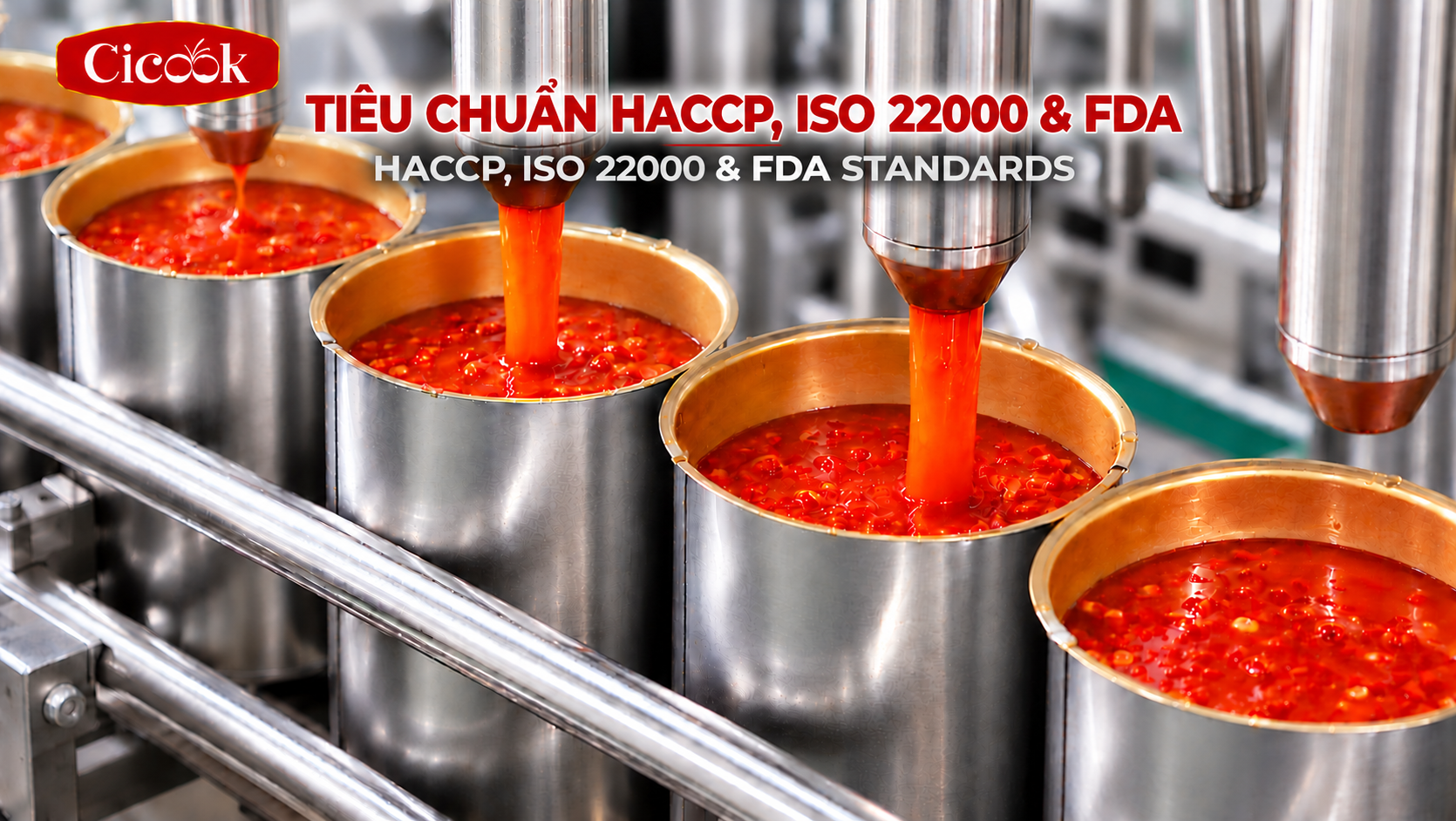
Learn About the Three Key Standards—HACCP, ISO 22000, and FDA—in Seasoning Manufacturing. Discover the Essential Requirements for Getting Dipping Sauces and Seasoning Powders onto Major Supermarket Shelves and into International Export Markets.
HACCP, ISO 22000, and FDA are three internationally recognized food safety standards and regulatory frameworks relevant to the industrial seasoning industry. A reputable ODM seasoning manufacturer that meets the requirements of all three, such as CiCook's facility in Thu Duc, is an important prerequisite for seasoning products to pass the evaluation process for entry into major supermarket chains and export markets.
1. Comparison Matrix: HACCP vs. ISO 22000 vs. FDA in Seasoning Manufacturing
| Standard | Core Principles | Scope of Application | Commercial Value for Brand Owners |
|---|---|---|---|
| HACCP | Hazard Analysis and Critical Control Point (CCP) monitoring directly on the production line | Food safety control within the manufacturing facility | Helps meet the requirements for entry into modern trade (MT) channels and domestic supermarkets |
| ISO 22000 | A comprehensive food safety management system covering the entire process, from raw materials to finished products | The entire organization and supply chain | Facilitates access to international hypermarket systems and global F&B chains |
| U.S. FDA Requirements | Compliance with the U.S. Food Safety Modernization Act (FSMA) | Facility Registration and DUNS number requirements | Supports formal exports to the United States and sales through Amazon FBA in the U.S. market |
2. Practical Technical Barriers to Getting Seasoning Products into Supermarkets and International Markets
Processed seasonings, including meat marinades, dipping sauces, seasoning powders, and dipping salts, are food products that may pose significant microbiological and preservation risks if they are not manufactured in a standardized environment.
3 "Critical Failure Points" That Can Prevent Seasoning Products from Reaching Supermarket Shelves
-
Microbial Cross-Contamination: The presence of pathogenic bacteria such as Salmonella and E. coli, or mold such as Aspergillus flavus (which can produce aflatoxins commonly associated with dried agricultural products such as pepper and chili), can result in an entire batch being rejected, recalled, or destroyed.
-
Heavy Metals and Pesticide Residues: Lead (Pb), cadmium (Cd), and arsenic (As) levels may exceed the limits established by the Ministry of Health when unverified agricultural raw materials with untraceable origins are used.
-
Physical Hazards from Foreign Matter: Metal fragments, stones, hair, or other foreign objects may enter products during the milling and processing of dried agricultural materials. HACCP-compliant manufacturing facilities must have metal detectors and magnetic filtration systems before packaging.
Strict Inspection Barriers in Export Markets (the United States, Japan, and the EU)
-
U.S. FPLA Labeling Requirements: The Nutrition Facts panel must comply with the FDA's prescribed format, and allergens such as soy, wheat, and seafood must be accurately declared.
-
Water Activity (aw) and pH Levels: For acidified dipping sauces classified as Acidified Foods, the FDA closely scrutinizes pasteurization processes and pH levels (generally required to be below 4.6 for relevant products) to control the risk of toxin production by Clostridium botulinum spores.
3. CiCook's Three Critical Control Points (CCPs) in Seasoning Manufacturing
At its production facility located at 1129 Nguyen Xien Street, Thu Duc City, Ho Chi Minh City, CiCook applies a closed-loop, one-way production process based on HACCP principles.
-
CCP 1: Raw Material Preparation and Elimination of Incoming Physical Hazards
All raw agricultural materials, including garlic, chili, pepper, and ginger, undergo sensory inspection, ozone-assisted washing, and processing through magnetic traps and impurity screening systems before entering industrial grinding equipment.
-
CCP 2: Control of Pasteurization Temperature and Holding Time (Thermal Processing)
Seasoning sauces are heated in enclosed, jacketed mixing kettles within a standard temperature range of 85°C–95°C, depending on the product's characteristics. The holding time is precisely controlled to destroy vegetative microbial cells without scorching sugars or degrading the essential oils responsible for the product's aroma and flavor.
-
CCP 3: Hot-Filling and High-Frequency Induction Sealing
Products are filled into bottles or jars at elevated temperatures to help sanitize the inner surfaces of primary packaging. The caps are sealed with airtight aluminum induction-seal liners to prevent microbial recontamination from the surrounding environment and maintain a shelf life of 12–24 months without excessive reliance on chemical preservatives.
4. Added Value for Brand Owners When Manufacturing at a HACCP/ISO 22000-Compliant Facility
Partnering with a manufacturer that has a standardized quality management system provides brand owners with a significant competitive advantage.
-
Reduce Factory Audit Time by Up to 90% (Real-Time Audit Readiness): When pitching products to retail chains such as WinMart, Co.opmart, or Central Retail, procurement teams typically require factory assessment documentation. CiCook provides valid documentation, including the Certificate of Eligibility for Food Safety, HACCP certification, and ISO 22000 certification, helping partners complete the document review process more efficiently.
-
Support for Product Self-Declaration Procedures: CiCook assists with submitting product samples for safety testing at independent laboratories accredited under VILAS, such as Quatest and Eurofins, and preparing product self-declaration dossiers in accordance with Decree No. 15/2018/ND-CP. This support comes with transparent commitments to formula confidentiality and Non-Disclosure Agreements (NDAs).
-
Professional Export Documentation Support: CiCook provides the necessary documentation for export batches, including Certificates of Free Sale (CFS) and Certificates of Analysis (COA). You can also review the detailed assessment of seasoning manufacturing capabilities in Ho Chi Minh City to make a more informed partnership decision.
image
Frequently Asked Questions (FAQ)
1. Do new brands selling online through TikTok Shop and Shopee need HACCP/ISO certification?
The law does not require every online business household to hold its own ISO certification. However, products sold must meet applicable food safety requirements, including product self-declaration supported by test results from a food safety-eligible manufacturing facility. Manufacturing at a HACCP/ISO-compliant facility helps ensure that products have the necessary legal documentation, reducing the risk of penalties from market surveillance authorities or the suspension of online stores.
2. How can I register an FDA number for seasoning products manufactured at CiCook for export to the United States?
CiCook supports customers with registering their manufacturing facility with the U.S. FDA to obtain a Food Facility Registration Number (FFRN), using the facility address in Thu Duc. CiCook also provides guidance on label design in accordance with the U.S. Fair Packaging and Labeling Act (FPLA).
3. How long are HACCP and ISO 22000 certificates issued to manufacturing facilities valid?
These certificates are generally valid for three years, subject to periodic annual surveillance audits by independent certification bodies to ensure that the facility continues to maintain appropriate hygiene conditions and strict control procedures.
Expert Perspective & Practical Insights
A frank perspective on food safety certification: Many businesses treat HACCP or ISO 22000 certificates as little more than "wall decorations for marketing purposes." In the seasoning industry, however, these certifications serve as a lifeline for brand protection.
A batch of 5,000 sauce bottles contaminated with mold or leaking at the caps while sitting on supermarket shelves can cost you far more than product compensation. It can also destroy the reputation and credibility you have worked hard to build with retail partners. Choosing a manufacturing facility that rigorously controls critical control points (CCPs), starting with raw material handling, is one of the smartest ways to protect your brand and gain peace of mind when distributing products on a large scale.