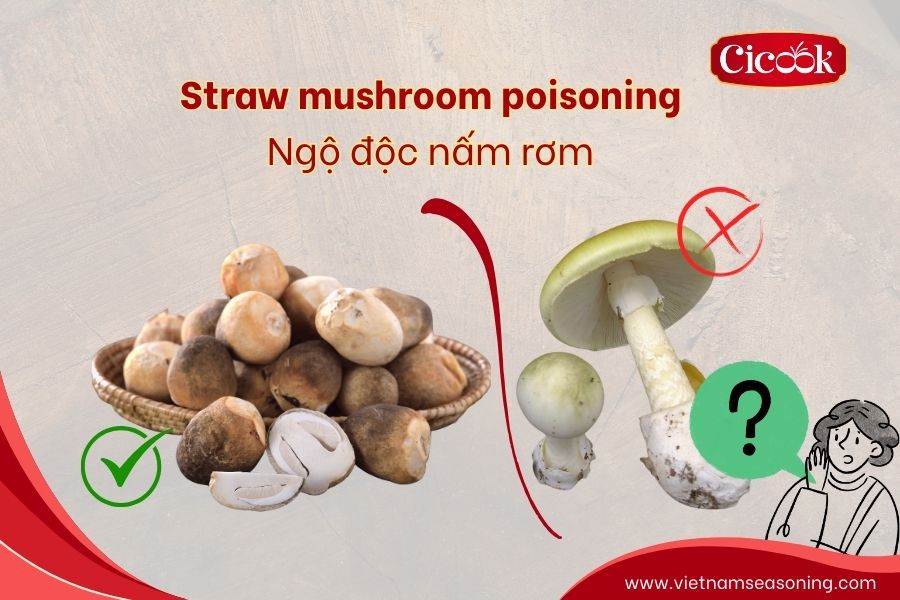
Straw mushroom poisoning is a common concern in home kitchens, yet the mushrooms themselves are not toxic. Most severe cases occur when edible straw mushrooms are mistaken for wild poisonous varieties. Based on professional expertise and medical specialists, Cicook provides a comprehensive guide, from what to do in case of mushroom poisoning, to essential usage precautions, and clear answers to common questions, such as whether darkened straw mushrooms are safe to eat, to help protect consumer health.
Recognizing the warning signs: 4 stages of toxic mushroom poisoning
Understanding the progression and mechanism of mushroom toxins is essential for timely intervention, as straw mushroom poisoning symptoms typically unfold in distinct stages.
|
Stage |
Onset time |
Primary symptoms |
Danger level |
|
Latent period |
6-24 hours after ingestion (average 12 hours) |
No abnormal signs whatsoever |
Requires vigilance; easily overlooked |
|
Gastrointestinal distress |
Typically, 10-12 hours after ingestion |
Nausea, vomiting, severe abdominal pain, persistent diarrhea (watery, cloudy white stools) |
Requires immediate first aid and emergency care |
|
False recovery |
1-3 days after the gastrointestinal phase |
Digestive symptoms cease; the patient feels recovered |
MOST DANGEROUS: Amatoxin silently attacks and causes severe liver cell damage |
|
Liver/kidney failure |
Typically, 4-5 days after ingestion |
Jaundice, edema, gastrointestinal bleeding, coma |
Extremely high mortality risk (60-80%) |
Medical professionals emphasize this key point: Users should choose mushrooms grown in safe, controlled habitats of straw mushrooms to avoid wild varieties that may contain dangerous toxins capable of causing serious harm to humans and animals if consumed accidentally. Amatoxin is an extremely dangerous toxin commonly found in species like Amanita phalloides. This toxin attacks liver cells and causes death at alarming rates.
Emergency first aid for straw mushroom poisoning at home
In emergencies where someone has consumed toxic mushrooms, patients and caregivers must immediately implement toxin elimination measures to minimize absorption into the body. Prompt home treatment, combined with transport to the nearest medical facility, plays a critical role in saving the patient's life.
- Induce vomiting as soon as possible: This helps remove mushrooms from the stomach, ideally within the first hour after consumption. (Only perform when the patient is conscious)
- Administer activated charcoal (if available): Use approximately 1 gram of activated charcoal per kilogram of body weight to absorb toxins in the digestive tract. Repeat every 2-3 hours for 24-48 hours.
- Rehydrate and replace electrolytes: Provide adequate fluids, preferably oral rehydration solutions like Oresol to prevent dehydration from vomiting and diarrhea.
- Monitor and manage position: If the patient becomes unconscious or experiences seizures, quickly position them on their side to prevent choking.
- Artificial respiration: Perform if the patient shows signs of weak breathing or respiratory arrest.
CRITICAL: After first aid, immediately transport the patient to the nearest medical facility. Remember to bring a sample of the consumed mushrooms to assist with diagnosis.
Safety rules: Distinguishing and addressing spoiled straw mushrooms
Preventing mushroom poisoning is crucial for health protection, as toxic wild mushrooms often resemble common edible varieties. Straw mushrooms are familiar edible fungi that are widely cultivated and completely safe when properly selected and prepared.
Distinguishing safe straw mushrooms from toxic wild mushrooms
To avoid dangerous confusion, clearly recognize the differences between safe straw mushrooms and toxic varieties:
|
Mushroom type |
Characteristic |
Description |
|
Straw mushroom |
Color |
Gray, light brown, or black |
|
Straw mushroom |
Shape |
Short stem, round cap, firm to the touch, not bruised |
|
Poisonous mushroom |
Color |
Bright colors (red, yellow, bright green) |
|
Poisonous mushroom |
Other Signs |
Ring around the stem or a pungent, unusual odor |
The 4 NEVER rules (Expert recommendations):
- NEVER eat wild mushrooms of unknown origin
- NEVER taste-test mushrooms
- NEVER eat bruised or spoiled mushrooms
- NEVER skip thorough inspection before cooking
Decoding 4 signs of spoiled straw mushrooms
|
Spoilage sign |
Professional explanation |
Potential poisoning risk |
|
Can you eat blackened straw mushrooms? |
Usually due to natural oxidation, not toxic. However, if blackening accompanies softness or sliminess, it indicates bacterial contamination. |
Low, unless accompanied by foul odor (severe bacterial infection) |
|
Can you eat moldy straw mushrooms? |
Mold is a clear sign of fungal growth, typically appearing white, green, or black. |
High; mold produces mycotoxins dangerous to the liver. Must discard. |
|
Slimy straw mushrooms |
Slime is mucus secreted by bacteria during tissue decomposition. |
High; causes acute gastrointestinal distress (typical food poisoning) |
|
Are bitter straw mushrooms toxic? |
Mainly due to age, dehydration, or growing conditions. Not an acute toxin. |
Low; however, nutritional quality decreases and more susceptible to bacteria |
|
Can you eat opened straw mushrooms? |
Completely edible but aged; less flavorful than young buds. No poisoning risk. |
Safe to eat; not toxic |
Nutritional value and proper straw mushroom storage guidelines
Straw mushrooms are highly nutritious foods offering numerous health benefits. They contain high levels of plant protein, powerful antioxidants like polysaccharides and beta-glucan, B vitamins (B1, B2, B3), vitamin C, fiber, and essential minerals (calcium, iron, magnesium, phosphorus).
Research from Vietnam's National Institute of Nutrition shows that the effects of straw mushrooms contain natural anti-inflammatory compounds capable of preventing chronic diseases.
- Immune system enhancement: Rich in polysaccharides and beta-glucan (antioxidants)
- Digestive support: Abundant fiber content
- Cardiovascular support: Helps reduce bad cholesterol (LDL)
|
Aspect |
Proper method |
Safety notes |
|
Selecting fresh mushrooms |
Choose fresh straw mushrooms with round, firm caps, no bruising, and characteristic pleasant aroma |
Avoid mushrooms showing signs of wilting, mold, or unpleasant odors |
|
Proper preparation |
Before cooking, soak mushrooms in diluted salt water for 15-20 minutes, then rinse thoroughly with clean water |
Preparation removes dirt, bacteria, and ensures cleanliness before cooking |
|
Cooking |
Straw mushrooms cook quickly; only 5-7 minutes are needed to preserve flavor and nutritional value |
Can be stir-fried, used in soups, or hot pots |
|
Fresh storage |
Store straw mushrooms in paper bags or wrapped in dry cloth in the refrigerator's vegetable compartment |
Avoid plastic bags as they trap moisture and promote mold growth |
Understanding the four stages of mushroom poisoning and the spoilage signs of straw mushrooms is essential for health protection. More importantly, absolute safety begins with reputable suppliers.
To eliminate concerns about straw mushroom poisoning from poor quality or bacterial contamination, choose clean straw mushrooms from trusted, certified suppliers. Quality assurance from cultivation through storage processes ensures mushrooms remain fresh, without blackening or sliminess, providing peace of mind for family meals.
Frequently asked questions (FAQ)
- How can you quickly distinguish cultivated straw mushrooms from wild mushrooms?
Cultivated straw mushrooms typically have a gray or light brown coloring, with firm, round caps, while wild toxic mushrooms often display bright colors or unusual, pungent odors.
- Can straw mushrooms cause poisoning if improperly stored?
Yes, mushrooms stored in damp, poorly ventilated environments easily ferment, become contaminated with bacteria, and produce toxins, causing abdominal pain and vomiting.
- What is the critical window for treating mushroom poisoning?
The first hour after consumption is most critical for inducing vomiting and limiting toxin absorption before transferring to a medical facility.
- Where should you buy clean straw mushrooms for safe use?
Choose brands with clear quality control standards and certifications that guarantee fresh, clean mushrooms meeting safety standards.