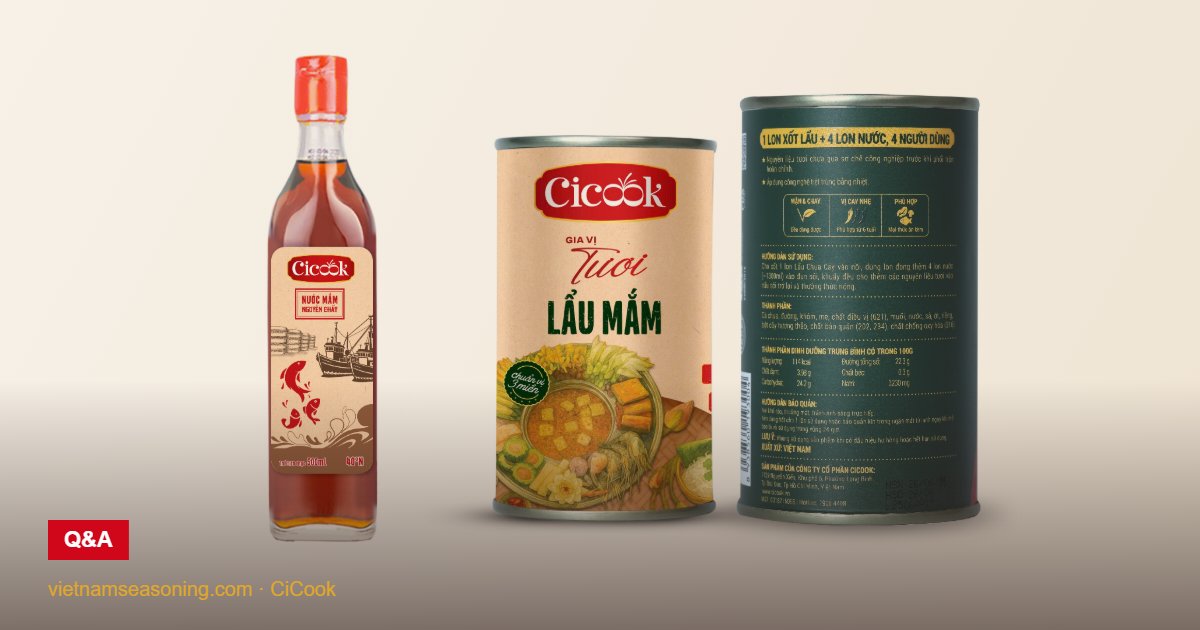
Which documents should buyers request for Vietnamese sauces? FDA prior notice, acidified food filings, EVFTA proof of origin and batch COA, explained.
For Vietnamese sauces, importers should line up four document groups before shipping: the manufacturer's FDA facility registration number and a timely prior notice for the US, FCE and SID filings if the sauce is an acidified food, an EVFTA proof of origin for the EU, and a batch COA.
This Q&A brings together the US and EU rules that buyers of Vietnamese hotpot bases, dipping sauces and marinades ask about most often, as checked on 28 October 2026. For each document it covers what it proves, when it is due and what can go wrong when it is missing.
1. What export documents should you request for Vietnamese sauces?
The list depends on the destination market and on how the sauce is made. A shelf-stable chilli dipping sauce bound for the US raises different questions from a frozen hotpot base bound for Germany. Three questions decide what you need:
- Where is it going? US imports rely on the manufacturer's FDA registration and a prior notice for every shipment; in the EU, the EVFTA preferential tariff depends on a valid proof of origin.
- Is it an acidified food? Under 21 CFR 114.3, an acidified food is a low-acid food with added acid or acid food, a water activity above 0.85 and a finished pH of 4.6 or below. Foods stored, distributed and sold under refrigeration, carbonated drinks, jams, jellies and preserves are excluded.
- What does your contract require? A certificate of analysis (COA) is not a government document, but it is the buyer's main evidence that each lot matches the agreed specification.
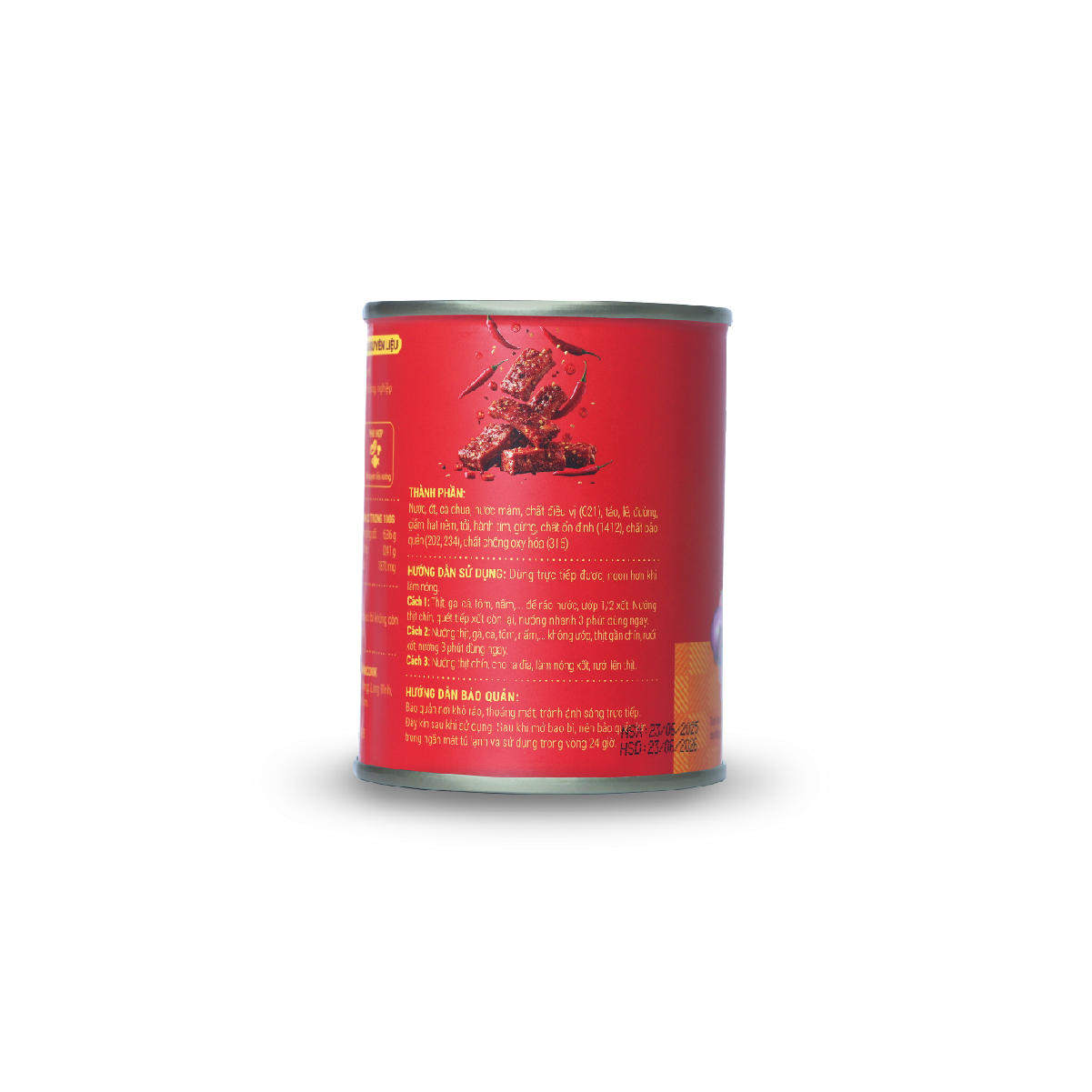
Back label of a CiCook chilli barbecue sauce can, where product information is printed.
2. Key facts: US and EU document rules at a glance
The table summarises the rules we checked against the primary texts listed under References.
| Document | Market | What it shows | Timing or validity | Rule |
|---|---|---|---|---|
| Manufacturer's FDA registration number | US | Identifies the registered facility in the prior notice | Needed before each prior notice is filed | 21 CFR 1.281 |
| Prior notice confirmation | US | FDA has been told about the shipment | At least 8 hours before arrival by sea, 4 hours by air or rail, 2 hours by road; up to 30 days ahead via ACE, 15 days via PNSI | 21 CFR 1.279 |
| FCE registration (Form FDA 2541) and process filing (Form FDA 2541e) | US, acidified foods only | Processor is registered and has filed a scheduled process | Register before offering food for import; file within 60 days of registration and before packing any new product | 21 CFR 108.25 |
| Movement certificate EUR.1 | EU (EVFTA) | Vietnamese origin for the preferential tariff | Valid 12 months from issue | Circular 14/2026/TT-BCT |
| Origin declaration on a commercial document | EU (EVFTA) | Origin declared by the exporter | Consignments not exceeding EUR 6,000 | Circular 14/2026/TT-BCT; EU guidance |
| Certificate of analysis (COA) | All markets | Lot results against the agreed specification | Every batch | Buyer-supplier contract |
2.1. Is my sauce an acidified food under FDA rules?
If the sauce is shelf-stable, reaches a pH of 4.6 or below because acid was added, and has a water activity above 0.85, it may fall under the acidified food rules. In that case 21 CFR 108.25 applies to foreign processors as well: they must register before offering the food for import into the United States and file a scheduled process for each product. The final classification depends on the formula and process, so ask the factory how it has classified each item and why.
2.2. How far in advance must FDA prior notice be filed?
For sea freight, FDA must receive prior notice at least 8 hours before the shipment arrives at the US port of arrival. It can be submitted up to 30 calendar days ahead through CBP's ACE system, or 15 days ahead through FDA's PNSI. The notice must name the manufacturer with its FDA registration number (or give its full address and the reason no number is provided) and, for acidified foods, list lot or code numbers.
3. What goes wrong when a document is missing?
Missing or outdated paperwork usually costs time at the border. These are the gaps the rules make easiest to spot:
- Unregistered acidified food processor: 21 CFR 108.25 provides for refusal of admission under section 801 of the FD&C Act for acidified foods that may be injurious to health, until FDA is satisfied the processor complies.
- Prior notice filed too late: a notice that reaches FDA less than 8 hours before a vessel arrives does not meet the timing in 21 CFR 1.279.
- Old origin rules in supplier templates: Circular 14/2026/TT-BCT, in force since 10 May 2026, replaced Circulars 11/2020/TT-BCT and 41/2022/TT-BCT.
- Expired EUR.1: the certificate must be presented to customs in the importing country within its 12-month validity, unless the delay was beyond the importer's control.
- Lot codes that do not match: if the COA, cartons and invoice show different lot codes, the COA no longer proves anything about the goods in the container.
4. Practical checklist before you confirm a sauce order
- Ask for the manufacturer's FDA registration number and agree who will file prior notice and when, based on the vessel's estimated arrival.
- For every shelf-stable acidic sauce, ask whether it is classified as an acidified food and, if so, for the FCE number and the process filing for each product and container size.
- For EU orders, agree before booking whether the goods will travel with an EUR.1 or an origin declaration (only for consignments up to EUR 6,000), and check the issue date.
- Request a COA for every lot that covers the parameters in your spec sheet, such as pH, water activity, salt and microbiology, and quotes the same lot code as the cartons.
- Keep one shared folder per shipment so the factory, forwarder and customs broker work from the same document versions.
5. What this means for importers and brands
Document gaps are easiest to fix at the quotation stage, before formulas and packaging are locked. If you are planning supplier visits, our Vietnam Foodexpo 2026 sourcing checklist for sauce importers lists questions to bring, and our guide to HACCP, ISO 22000 and FDA standards in seasoning manufacturing explains how factory certification fits alongside shipment documents.
CiCook's facility is registered with the US FDA, certified to ISO 22000:2018 and HACCP, and issues a COA for every batch. Its Vietnamese dipping sauces, hotpot bases and marinades can be packed in jars, bottles, cans, pouches, sachets or bulk.
FAQ
Does a refrigerated sauce need an acidified food process filing?
No. Foods stored, distributed and sold under refrigeration are excluded from the acidified food definition in 21 CFR 114.3. Other FDA import rules, including prior notice, still apply.
Can a small shipment to the EU use an origin declaration instead of an EUR.1?
Yes. Under Circular 14/2026/TT-BCT, for consignments not exceeding EUR 6,000 the exporter may declare origin on an invoice, delivery note, packing list or similar commercial document.
Need the document pack for a specific sauce and market? Contact CiCook's export team or message WhatsApp/Zalo +84 824 084 408.
References
- U.S. FDA (content current as of 9 April 2020): Establishment registration and process filing for acidified and low-acid canned foods
- eCFR via Cornell LII (accessed 28 October 2026): 21 CFR 1.279 – When must prior notice be submitted to FDA?
- eCFR via Cornell LII (accessed 28 October 2026): 21 CFR 1.281 – What information must be in a prior notice?
- eCFR via Cornell LII (accessed 28 October 2026): 21 CFR 108.25 – Acidified foods
- eCFR via Cornell LII (accessed 28 October 2026): 21 CFR 114.3 – Definitions
- Tạp chí Công Thương (22 April 2026): MOIT issues Circular 14/2026/TT-BCT on EVFTA rules of origin, effective 10 May 2026
- European Commission, DG TAXUD (September 2022, v6): EVFTA guidance on the rules of origin