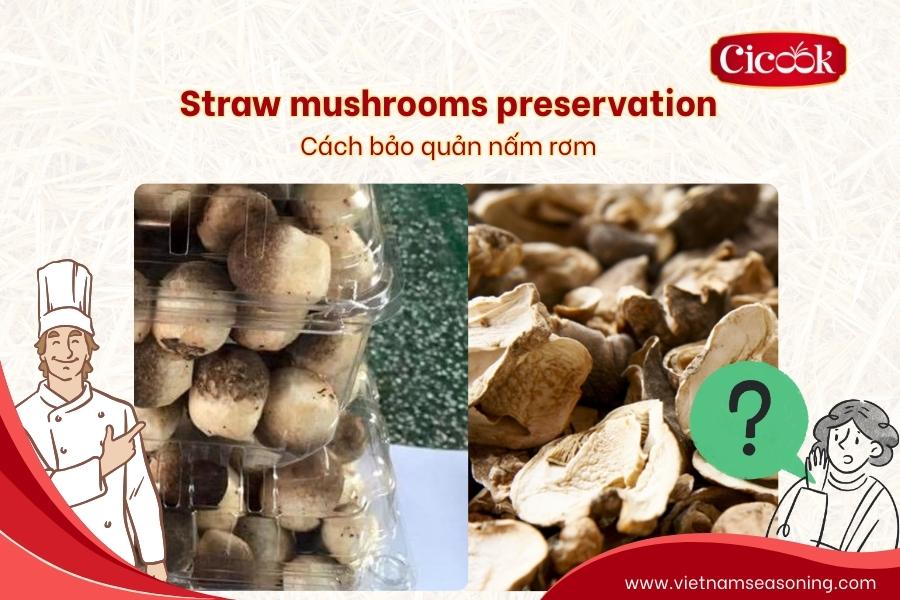
Straw mushrooms are a staple in Vietnamese cuisine, but they deteriorate rapidly when stored improperly, becoming slimy, developing off-odors, and potentially producing toxins.
In this comprehensive guide, Cicook experts will walk you through selecting fresh mushrooms, proper preparation techniques, and 5 effective straw mushrooms preservation methods tailored to different storage durations, helping home cooks and culinary enthusiasts maintain mushroom freshness safely for family meals.
Health benefits of straw mushrooms
Before diving into preservation techniques, understanding the nutritional value and the effects of straw mushrooms helps us appreciate why maintaining their freshness is crucial. Straw mushrooms provide abundant nutrients, including protein, fats, carbohydrates, fiber, calcium, iron, and vitamins A, B1, B2, C, D, and PP. These nutrients deliver several notable health benefits:
- Cancer prevention support: Straw mushrooms contain natural antioxidants that help reduce cancer cell development and prevent disease complications. Research has demonstrated their ability to inhibit cancer cell growth and stimulate interferon production, helping block viral development.
- Immune system enhancement: The special Polysaccharide compounds in straw mushrooms activate immune cells, increasing T-lymphocyte and B-lymphocyte development, thereby improving immune system function.
- Obesity prevention: With high nutrient content but extremely low calories, straw mushrooms support effective weight management, creating lasting satiety and reducing food cravings.
- Benefits for diabetics and hypertension patients: Consuming straw mushrooms stimulates pancreatic insulin secretion, supporting blood sugar reduction.
5 post-harvest straw mushrooms preservation methods by storage duration
To optimize nutrition and health benefits according to usage timeline, Cicook's culinary experts recommend applying flexible straw mushrooms preservation methods based on your needs.
|
Preservation method |
Main preparation requirements |
Intended use |
|
Refrigerator (Fresh Section) |
Wash clean, dry completely |
Use within the week |
|
Salt Pickling |
Boil/blanch in salt water/vinegar |
For pickled dishes |
|
Freezing (Deep Freeze) |
Cook mushrooms (steam/blanch/fry) |
Long-term storage |
|
Dehydrating/Sun Drying |
Sun dry or dehydrate at 40-43°C |
Long-term reserves, dried dishes |
Method 1: Refrigerator storage for overnight straw mushrooms preservation
The refrigerator is the most popular and ideal location for keeping straw mushrooms fresh. Low temperatures limit bacterial growth and reproduction, maintaining mushroom freshness for approximately 4-5 days.
Step-by-step process:
- After washing and completely drying the straw mushrooms, place them in glass or plastic containers with tight-sealing lids
- Store the container in the refrigerator at temperatures between 10-15°C
- When needed, remove only the necessary amount and immediately reseal the container for continued storage
Important note: If refrigerated straw mushrooms develop water discharge or a slimy film, they have spoiled. Spoiled mushrooms lose nutritional value and may produce toxins, so avoid using them.
Method 2: Long-term straw mushrooms preservation with salt water pickling
Soaking mushrooms in salt water is a traditional preservation method that can extend mushroom usability for several months.
Step-by-step process:
- After preparation, boil mushrooms in salted boiling water for 2-3 minutes to stop cellular activity
- Remove mushrooms and immediately soak in cold water for 3-5 minutes to firm them up and maintain crispness
- Pickling solution recipe: Prepare by boiling 180ml water with 1/3 teaspoon white vinegar, 1 tablespoon salt, 1 tablespoon peppercorns, plus sliced garlic, chopped scallions, and chives
- Add all mushrooms to the pickling liquid and simmer on low heat for 15-20 minutes
- Pour mushrooms and mixture into prepared glass jars, cool for 30-60 minutes, then seal tightly
Storage tip: Keep the jar in the refrigerator's fresh section and check regularly, replacing the liquid when it becomes cloudy.
Method 3: Straw mushrooms preservation through freezing
Freezing is an optimal solution for maintaining straw mushroom freshness, extending preservation from 6 to 12 months.
3-Step optimal freezing process:
- Step 1: Cook the mushrooms (Steam/Fry/Blanch) - Straw mushrooms must be cooked before freezing to preserve flavor and texture. Steam for 3-5 minutes, fry in a little oil for 3-5 minutes, or boil to minimize oil, then remove.
- Step 2: Maintain crispness with ice bath - After cooking, soak mushrooms in ice water for 5-10 minutes to preserve their crisp texture.
- Step 3: Position deep in freezer - Once cooled, place mushrooms in airtight food containers with 1.5cm space from the lid. Store containers at the back of the freezer door or deepest part of the freezer compartment where temperature remains most stable for long-term preservation.
Usage note: When needed, simply thaw gradually before cooking.
Method 4: Straw mushrooms preservation with freeze-drying
Long-term straw mushrooms preservation through freeze-drying is a highly effective advanced technology method that maintains nutritional value and mushroom structure.
Basic process:
- Wash fresh straw mushrooms clean and arrange in a thin layer on drying trays
- Place mushrooms in freeze-dryer at approximately 50-60°C
- Drying time typically extends 4-6 hours depending on initial moisture content
- Fully dried, crispy freeze-dried mushrooms can be stored in dry conditions
Method 5: Long-term storage through dehydration/Sun drying
Dehydrating or sun drying is a popular traditional straw mushrooms preservation method, allowing storage for up to 6 months.
Step-by-Step process:
- After washing clean, cut straw mushrooms in half
- You can manually sun-dry under direct sunlight
- Equipment Drying: If using a dehydrator, oven, or air fryer, dry mushrooms at approximately 40-43°C. Drying time may extend about 3-8 hours depending on equipment
- Completion Criteria: When mushrooms achieve crispness and snap when bent, they're ready for storage and should be placed in sealed jars
Rehydration instructions: When using, simply soak the needed amount in water for 20-30 minutes until mushrooms expand evenly and are ready for cooking.
Risk management: Signs of spoiled straw mushrooms and solutions
Recognizing spoilage signs is crucial for food safety and consumer health. Without proper preservation, they quickly lose flavor, nutritional value, and easily produce toxins.
|
Sign |
Detailed Description |
|
Slimy - Sticky - Water Discharge |
Mushrooms develop a slimy film; when touched, feel slippery, sticky, no longer naturally dry |
|
Blackening |
Mushrooms turn dark or blackish, possibly from strong oxidation or beginning decomposition. Usually accompanied by strange odors - DO NOT USE |
|
Mold |
White, green, or black mold spots appear from prolonged storage in humid environments - absolutely do not use as may cause poisoning |
|
Abnormal Odor |
Mushrooms smell sour, pungent, strong, or lose their characteristic mild aroma. Even if exterior doesn't show obvious damage, mushrooms have begun deteriorating |
Safety recommendation: Spoiled mushrooms are no longer fresh for consumption. Cicook's culinary experts advise that if you detect any signs of spoilage, even minimal, it's best to discard completely to ensure health safety.
Selecting fresh straw mushrooms for preservation and standard preparation process
While knowing proper straw mushrooms preservation techniques is important, users must first select fresh, nutritious mushrooms for effective storage.
Criteria for selecting fresh straw mushrooms:
- Check appearance: Choose mushrooms with uniform color, intact stems, no scratches, cuts, or any signs of bruising
- Assess moisture: Mushrooms should be completely dry with no signs of sliminess or wetness, as damp mushrooms spoil quickly
- Feel firmness: Fresh mushrooms typically feel firm and solid in hand, not brittle when held
- Check smell: Freshly harvested straw mushrooms have a natural aroma and gentle earthy scent
Straw mushroom preparation process before preservation:
- Wash away dirt: Purchased straw mushrooms should be washed clean to remove straw, sand, and dirt
- Remove damaged mushrooms: Use a knife to cut away bruised portions, preventing bacterial spread
- Dry completely: After washing, drain thoroughly or use soft cloths or paper towels to completely dry mushrooms, as moisture accelerates spoilage
Mastering expert straw mushrooms preservation techniques is key to maximizing the nutritional value of these mushrooms. Depending on usage timeline, you can choose refrigerator storage (short-term) or freezing/dehydrating (long-term).
However, if you seek peace of mind regarding quality, safety, and convenience while bypassing complex selection and preservation steps, Cicook straw mushrooms are a reliable choice. We use mushrooms selected from safe growing regions and processed with advanced technology to provide clean, quality straw mushroom solutions ready for direct use or cooking into various dishes.
Frequently asked questions (FAQ)
- How to prevent straw mushrooms from turning black?
To avoid blackening, wash mushrooms with cold water, dry thoroughly before storage, and immediately place in sealed containers. Avoid exposing mushrooms to air or light too long as they oxidize easily.
- How long do fresh straw mushrooms last?
With proper preservation, fresh straw mushrooms last 3-5 days in the refrigerator's fresh section; at room temperature they remain fresh only about 6-8 hours.
- Can blackened refrigerated straw mushrooms be used?
No, blackened mushrooms typically indicate strong oxidation or beginning decomposition, often accompanied by strange odors. Discard immediately to avoid poisoning risk.
- Can water-discharged straw mushrooms be eaten?
Not recommended, as mushrooms that discharge water, become sticky, or develop slimy films have spoiled and may produce health-affecting toxins.
- Where to buy fresh straw mushrooms reliably and conveniently?
Choose brands with transparent growing regions, standard processes, and safety certifications. Cicook straw mushrooms are a trustworthy choice: clean, export-standard, prepared and preserved using modern technology.