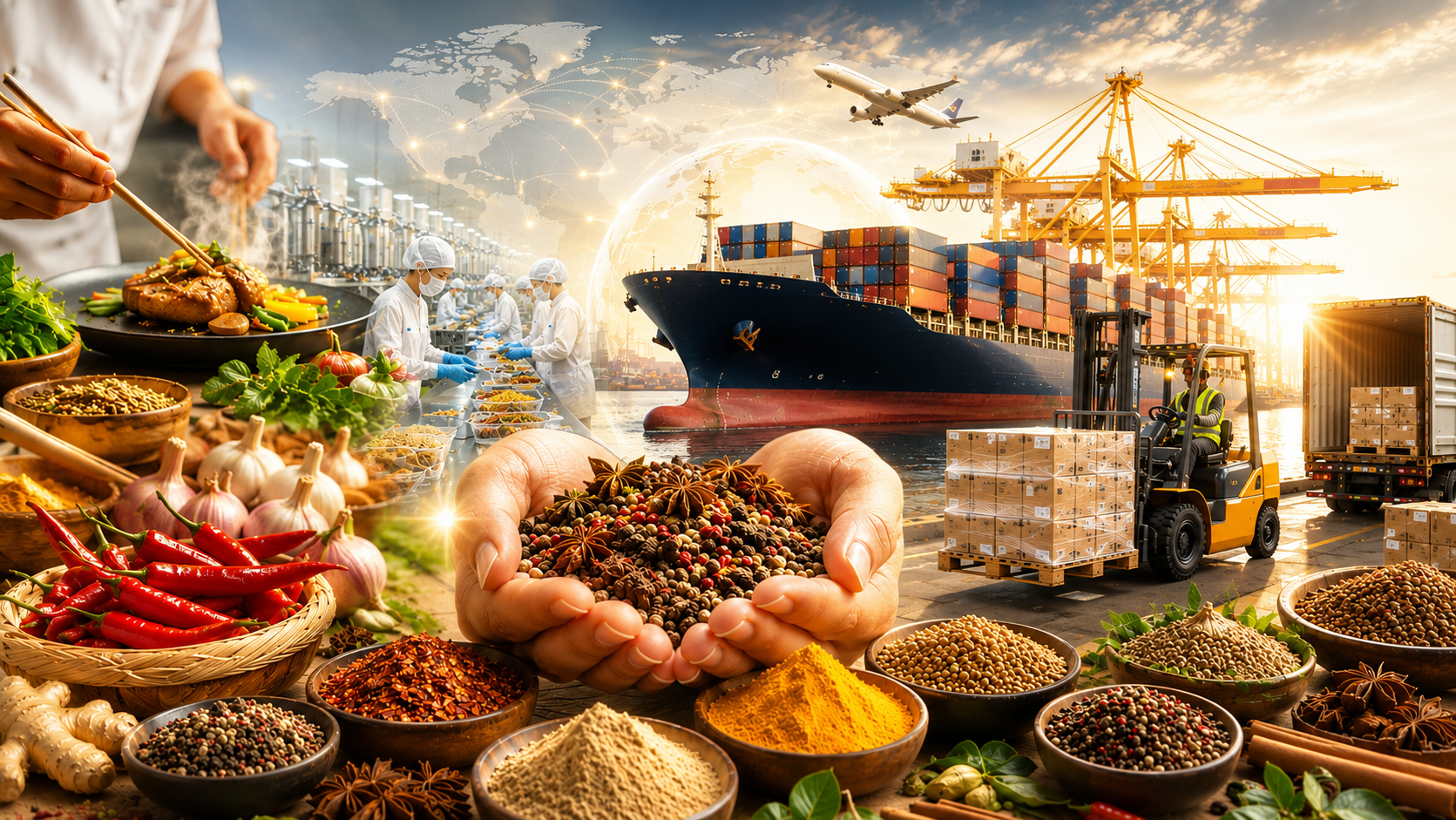
Export-standard seasoning manufacturers are the bridge that brings Vietnamese flavors to global markets. With internationally compliant production, strict quality control, and end-to-end ODM/OEM solutions, CiCook helps businesses develop products that meet international export requirements and expand worldwide
As global demand for authentic international cuisine continues to grow, Vietnamese seasonings have become more than a source of national culinary pride—they represent a significant export opportunity. However, for dipping sauces, ready-to-use seasonings, and specialty spice blends to reach supermarket shelves in the United States, the European Union, Japan, and South Korea, manufacturers must comply with some of the world's most demanding food safety and quality standards.
1. Meeting the Challenges of International Markets
Exporting seasonings involves far more than shipping products overseas.
Each country enforces its own regulations regarding food safety, pesticide residues, ingredient declarations, nutritional labeling, and product traceability. Many promising Vietnamese food brands have struggled to enter international markets because they could not meet these technical requirements.
An export-ready seasoning manufacturer must therefore combine advanced production capabilities with internationally recognized quality management systems.
2. The Essential Certifications for Global Market Access
To successfully export Vietnamese seasonings, manufacturers should hold internationally recognized certifications that demonstrate product safety, quality, and compliance.
International Food Safety Certifications
Standards such as HACCP, ISO 22000, and FSSC 22000 provide the foundation for safe, standardized, and hygienic food manufacturing.
Market-Specific Certifications
Certain export destinations require additional certifications, including Halal certification for Muslim markets and Kosher certification for products intended for Jewish consumers.
Compliance with FDA and EU Regulations
Manufacturers exporting to the United States or the European Union must maintain rigorous controls over raw material sourcing, pesticide residue testing, product labeling, packaging, and manufacturing processes to comply with applicable regulatory requirements.
3. Why ODM Manufacturing Is the Key to Export Success
Professional ODM manufacturers such as CiCook play an increasingly important role in helping Vietnamese food brands expand into international markets.
Consistent Product Quality
Export markets demand absolute consistency across every production batch. Automated manufacturing systems minimize production variations while preserving authentic Vietnamese flavors that meet international quality standards.
Flavor Customization for Global Consumers
Experienced R&D teams can adapt seasoning formulations to match the taste preferences and nutritional expectations of different international markets while maintaining the distinctive character of Vietnamese cuisine.
Lower Investment Costs and Faster Market Entry
Rather than investing heavily in building export-certified manufacturing facilities, brands can leverage the infrastructure, certifications, technical expertise, and regulatory experience of established ODM partners, significantly reducing both costs and time to market.
4. A Roadmap for Exporting Vietnamese Seasonings
If your business plans to introduce Vietnamese flavors to international markets, choosing the right manufacturing partner is the first step.
1. Verify International Certifications
Request current certifications and evidence of previous export experience to ensure the manufacturer meets international regulatory requirements.
2. Evaluate R&D Capabilities
Confirm that the manufacturer can customize formulations to satisfy both local regulations and consumer preferences in your target market.
3. Ensure Supply Chain Transparency
Choose manufacturers with complete ingredient traceability systems. Transparent sourcing has become one of the most important requirements for passing food safety inspections in international markets.
Conclusion
Exporting Vietnamese seasonings is about more than selling food products—it is about sharing Vietnam's rich culinary heritage with the world.
By partnering with internationally certified seasoning manufacturers, brands gain access to advanced production capabilities, global compliance expertise, and professional R&D support. Together, these strengths provide a solid foundation for sustainable international growth while preserving the authentic flavors that make Vietnamese cuisine unique.
Frequently Asked Questions
1. Which international certifications are essential for exporting Vietnamese seasonings to markets such as the United States, Europe, and Japan?
Answer:
Manufacturers should obtain internationally recognized certifications including FSSC 22000, ISO 22000, and HACCP. Depending on the destination market, additional certifications such as FDA registration for the United States, Halal, or Kosher certification may also be required.
2. Why should food brands choose an ODM partner instead of building their own export-certified manufacturing facility?
Answer:
An ODM partner allows businesses to leverage existing certified manufacturing facilities, international compliance systems, and experienced R&D teams. This significantly reduces capital investment, accelerates regulatory approval, and shortens the time required to enter global markets.
3. How can Vietnamese seasonings maintain their authentic identity while appealing to international consumers?
Answer:
Professional ODM R&D teams carefully refine seasoning formulations to preserve the essence of Vietnamese cuisine while adapting flavor profiles, nutritional content, and ingredient specifications to meet the preferences and regulatory requirements of target international markets.
#CiCook #CiCookFactory #ODMManufacturing #OEMManufacturing #ExportReady #PrivateLabel #VietnameseCuisine #GlobalFoodManufacturing #ChefLessSolution #FranchiseInABox #ISO22000 #HACCP #FSSC22000 #FDACertified #FoodExport