Thailand's new prepackaged food label rule is in force. Here is what Vietnamese sauce and seasoning exporters should change on Thai-market labels.
Thailand's Ministry of Public Health Notification No. 474 (B.E. 2569), in force since 31 October 2026, revises prepackaged food labels. It adds sesame to the allergen list, turns lactose and sulphites at 10 mg/kg or more into separate warnings, allows optional digital labels and narrows some exemptions.
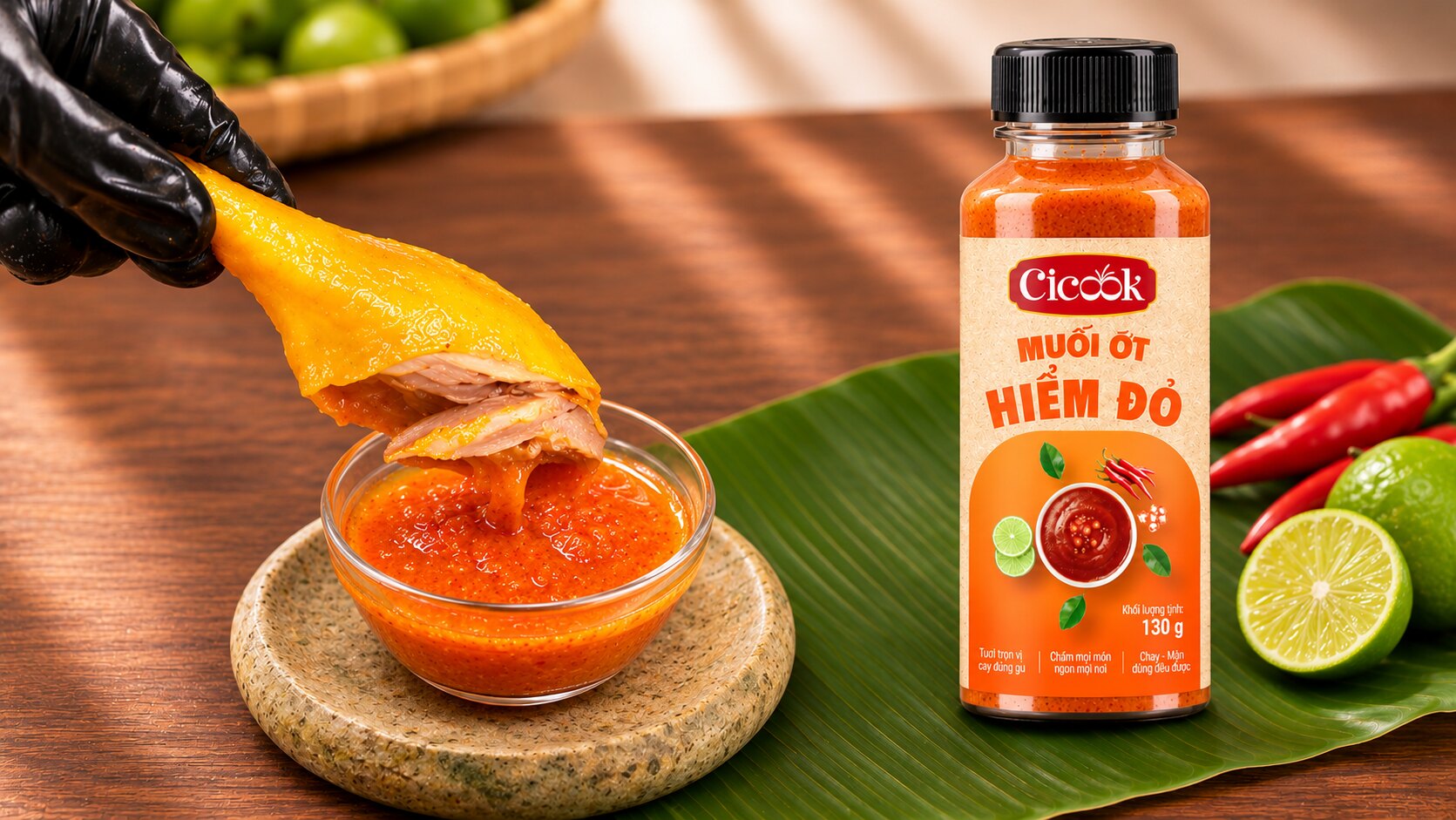
A bottled chilli dipping sauce served with a small bowl of sauce on a banana leaf. (Illustrative photo)
1. What did Thailand change in its food labelling rules?
Thailand amended its main labelling rule for prepackaged food. On 2 November 2026 the Food Division of the Thai Food and Drug Administration (Thai FDA) announced Ministry of Public Health Notification No. 474 B.E. 2569, issued under the Food Act B.E. 2522 on "labelling of food in containers (No. 2)", stating that it has applied since 31 October 2026 (31 ตุลาคม 2569 in the Thai calendar).
No. 474 amends Notification No. 450 B.E. 2567 (2024), the rule that has governed prepackaged food labels since 19 July 2024. The Thai FDA lists seven groups of changes: labelling exemptions, allergen information, food additive declarations, digital labels, export-only food, font size and drained weight.
2. Key changes at a glance
The table summarises the points that matter most for sauces, seasonings and dipping sauces sold in Thailand.
| Area | What No. 474 says (Thai FDA summary, 2/11/2026) | Why it matters for sauces |
|---|---|---|
| Allergens | Sesame and sesame products added to the allergen list; tree nuts now listed by name (almond, cashew, hazelnut, pecan, pistachio, walnut, Brazil nut, macadamia, pine nut) | Sesame oil and toasted sesame are common in dipping sauces and marinades |
| Lactose and sulphites | Removed from the allergen list; separate warnings instead for food containing lactose and food with residual sulphite of 10 mg/kg or more, calculated as sulphur dioxide | Check dried or preserved ingredients that may carry sulphite residues |
| Allergen exemption | Allergen statement may be omitted where a Codex-based risk assessment is done and residual protein meets the Codex level | Needs documented evidence, not an assumption |
| Food additives | Multi-function additives may be declared by another function where the process needs it; carriers and packaging gases no longer need to be declared | Ingredient lists may be simplified, but functions must match actual use |
| Digital labels | Optional; seven items must stay on the physical label: name, Thai FDA number, net quantity, ingredients, allergens, warnings, expiry date | A QR code can carry extra details, not the core label |
| Exemptions | Nine categories, including food additives and food with added extracts, nutrients or synthetic substances, lose the direct-sale exemption on every channel | Seasonings with added extracts should check whether they fall in this group |
| Other | Font-size rules in clauses 5 and 15 apply to Thai text only; drained-weight rule removed from this notification; country of manufacture no longer required for export-only food | Layout of bilingual labels becomes clearer |
Source: Thai FDA Food Division notice on Notification No. 474 B.E. 2569 (2/11/2026).
2.1 Is sesame now a mandatory allergen in Thailand?
Yes. No. 474 adds "sesame and sesame products" as a new allergen item. Under the Notification No. 450 framework, allergen information appears as a "contains" or "may contain" statement, so a sauce with sesame oil or sesame seeds needs that statement on its Thai label.
2.2 Can a QR code replace the printed Thai label?
Only in part. The digital label is an optional measure: the seven core items above must still be printed on the pack. Five groups, including infant foods, food for special purposes and dietary supplements, must show every mandatory item on the physical label if they also use a digital one.
3. What are the risks for Vietnamese sauce exporters?
The main risk is shipping stock with labels printed to the old allergen list. Products that contain sesame but show no sesame statement, or that list sulphites as an allergen rather than carrying the new warning, no longer match the rule.
- Hidden sesame. Sesame can enter through blends, toppings or oils from sub-suppliers, not only the main recipe.
- Sulphite residues. The 10 mg/kg threshold applies to residual sulphite in the finished food, so ingredient specifications and test data both matter.
- Extract-based seasonings. The new definitions of food with added extracts, nutrients or synthetic substances may pull some products into the nine categories with stricter rules.
- Transition. The Thai FDA summary does not state how long existing labels may stay on sale; importers should confirm the transitional clause in the notification text before using old stock.
4. How should exporters update Thai labels?
Treat No. 474 as a label review project shared by the manufacturer and the Thai importer. A vendor-neutral checklist:
- Re-run the allergen matrix. Check every ingredient and sub-ingredient for sesame and the named tree nuts, and record the result in the specification.
- Get sulphite data. Ask for test results or supplier declarations on residual sulphite, expressed as sulphur dioxide, for the finished product.
- Agree the label master file. Fix who drafts the Thai text, who approves it and which version is printed; keep it with your export document set for Vietnamese sauces.
- Decide on a digital label. If you add a QR code, keep the seven core items on pack and make sure the online page stays available.
- Plan the print run. Align new packaging with the importer's stock, and confirm the transitional rules before shipping old labels.
Thailand is not the only ASEAN market changing its requirements this year: our guide to Indonesia's halal rules for imported sauces covers a parallel deadline.
5. What this means for importers and brands
For Thai importers and private-label brands, No. 474 means re-checking allergen and warning statements on every sauce, starting with lines that use sesame, such as many Vietnamese dipping sauces. CiCook, an FDA-registered, ISO 22000:2018 and HACCP-certified manufacturer, supplies a COA for every batch and produces OEM, ODM and private-label sauces in jars, bottles, pouches and sachets.
FAQ
When did Thailand's Notification No. 474 take effect?
The Thai FDA Food Division says it has applied since 31 October 2026. It amends Notification No. 450 of 2024 on labelling of prepackaged food.
What is the sulphite threshold for the new Thai warning?
A warning is needed when residual sulphite is 10 mg/kg or more, calculated as sulphur dioxide. Sulphites are no longer on the allergen list itself.
Preparing sauces for the Thai market? Contact CiCook or message WhatsApp +84 813 378 398.
References
- Thai FDA Food Division (2/11/2026): Ministry of Public Health Notification No. 474 B.E. 2569 on labelling of food in containers (No. 2), in Thai
- Asia Pacific Food Industry (4/11/2026): Thailand updates food packaging regulations with new digital labelling framework
- GALA / Mirandah Asia (4/9/2024): Thailand updates on regulations for labeling of prepackaged foods (Notification No. 450)