The UAE-Vietnam trade deal is now in force. Here is what the tariff cuts, halal rules and Gulfood 2027 mean for sauce exporters.
The UAE-Vietnam Comprehensive Economic Partnership Agreement (CEPA) has been in force since 3 February 2026. The UAE removed tariffs on 74.2% of tariff lines at once, rising to 89.2% within five years, lowering the cost of shipping Vietnamese sauces to the UAE.
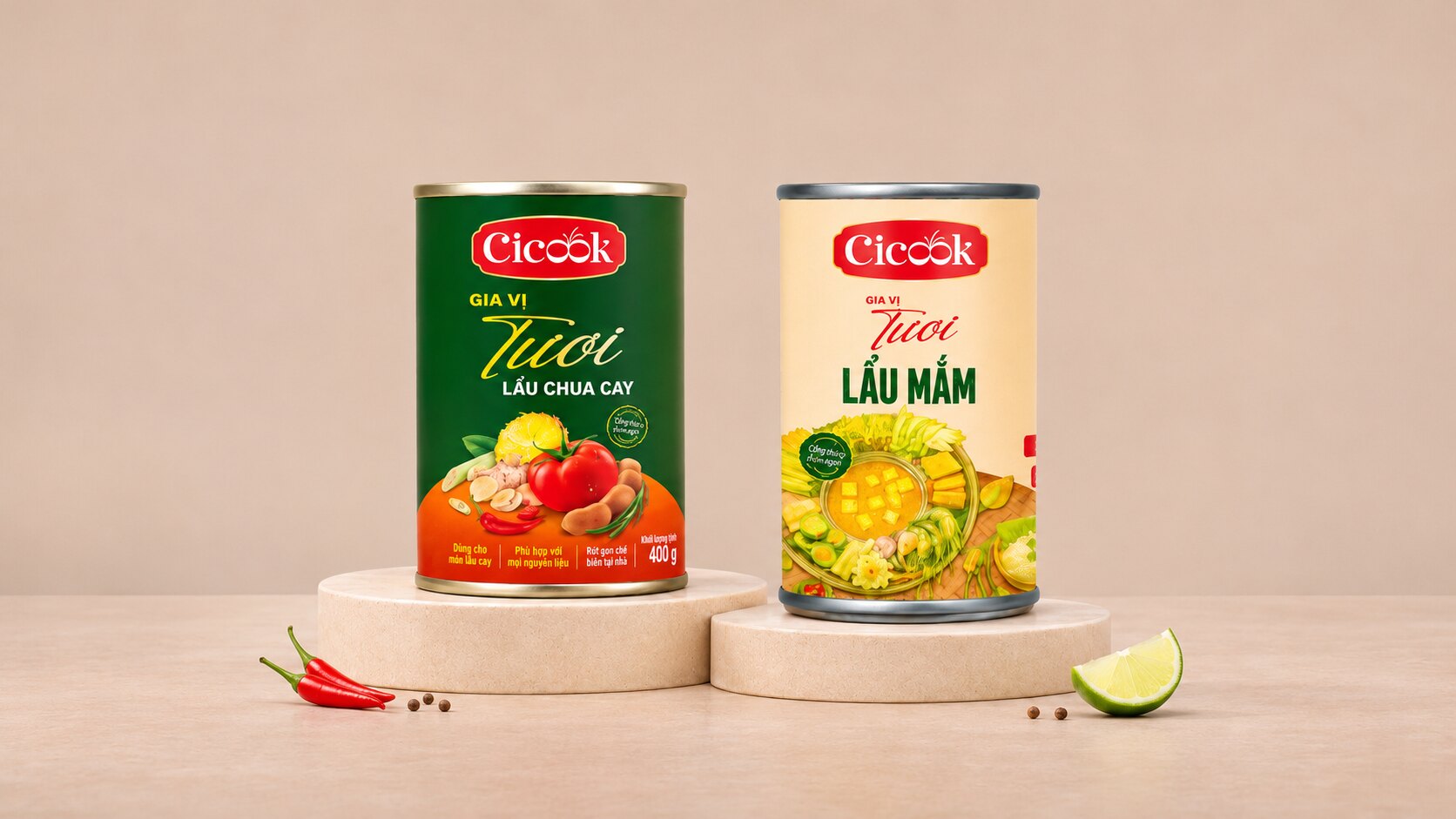
Two cans of hot pot sauce on round stands (AI-generated illustration)
1. What does the UAE-Vietnam CEPA change for food exporters?
It lowers the tariff cost of selling into the UAE. The Emirates News Agency (WAM) reported on 3 February 2026 that the CEPA had entered into force and would cut tariffs on 95% of product categories imported from Vietnam, covering 99% of their value. Vietnam's Voice of Vietnam (VOV) reported on 26 October 2026 that the UAE eliminated 74.2% of tariff lines on entry into force, a share set to reach 89.2% within five years.
The same VOV report noted that Vietnam's Ministry of Industry and Trade issued Circular No. 24/2026/TT-BCT, dated 5 May 2026, on rules of origin under the agreement. Exporters need to meet these rules to claim the lower tariffs.
2. Key figures: how big is UAE-Vietnam trade?
The answer depends on whose statistics you read, so it helps to compare them side by side.
| Indicator | Figure | Source |
|---|---|---|
| CEPA entry into force | 3 February 2026 | WAM, 3/2/2026; VOV, 26/10/2026 |
| UAE tariff lines cut at entry into force | 74.2%, rising to 89.2% within five years | VOV, 26/10/2026 |
| Bilateral trade, 2025 (UAE figure) | Over US$16.05 billion, up 27.4% | WAM, 3/2/2026 |
| Bilateral trade, 2025 (figure cited in Vietnam) | About US$6.55 billion; Vietnam's exports over US$5.9 billion | VOV, 26/10/2026 |
| Bilateral trade, H1 2026 (figure cited in Vietnam) | About US$3.157 billion, up 0.2% | VOV, 26/10/2026 |
| Container freight to the UAE | US$2,000–4,000 per container, 1–2 weeks in transit | VOV, 26/10/2026 (business association estimate) |
2.1 Why do the trade figures differ so much?
The two reports come from different statistical sources. WAM quotes the UAE side, which describes Vietnam as its largest ASEAN trading partner, while VOV cites a lower total for 2025. Neither report explains the gap, so buyers should treat both as indicators of scale rather than exact demand for sauces.
2.2 When is Gulfood 2027?
Gulfood 2027 runs from 15 to 19 March 2027 at Dubai World Trade Centre and Dubai Exhibition Centre, according to the organiser. The 2026 edition reported more than 8,500 exhibitors from 195 countries across 280,000 square metres.
3. What holds Vietnamese sauces back in the UAE?
Tariffs are only one cost. Nguyen Quang Huy, vice chairman of the Vietnam National Start-up Association, told VOV that trade is modest relative to its potential.
- Logistics. He cited shipping costs of US$2,000–4,000 per container and transit times of one to two weeks.
- Halal readiness. He said the halal market is still new to many Vietnamese firms, which must prepare production, quality, documentation and raw material sourcing for strict import standards.
- Market information. He noted that many Vietnamese firms have not yet given the UAE enough resources because of limited market information.
- Origin paperwork. Without documents that meet the CEPA rules of origin, a shipment pays the normal tariff.
4. How should buyers source Vietnamese sauces for the UAE?
Use the tariff saving as a reason to plan carefully, not as the business case. A vendor-neutral checklist:
- Confirm CEPA eligibility per product. Ask the supplier to check the HS code against the UAE schedule and the origin rules in Circular 24/2026/TT-BCT.
- Agree the halal route early. Decide which halal certification your UAE customers accept before recipes and labels are final; our article on halal certification for imported sauces shows how such rules shape timelines.
- Price the full landed cost. Add freight, insurance and port charges to the ex-works price; see our notes on container freight rates for sauce importers.
- Pick formats that travel. Shelf-stable cans, jars and pouches suit a one-to-two-week sea transit better than chilled products.
- Book meetings for Gulfood 2027. Use the March fair to taste samples and meet distributors before committing to a container.
5. What this means for importers and brands
For UAE importers and private-label brands, CEPA makes Vietnamese sauces such as Vietnamese dipping sauces more competitive, provided origin and halal paperwork are right from the first shipment. CiCook holds HALAL, HACCP and ISO 22000:2018 certification, issues a COA for every batch and produces OEM, ODM and private-label sauces in jars, bottles, cans, pouches, sachets or bulk.
FAQ
When did the UAE-Vietnam CEPA take effect?
It entered into force on 3 February 2026, according to WAM and VOV.
Do all Vietnamese sauces enter the UAE duty-free?
Not automatically. The UAE cut 74.2% of tariff lines at once and will reach 89.2% within five years, and goods must meet the CEPA rules of origin to qualify.
Sourcing sauces for the UAE market? Contact CiCook or message WhatsApp +84 813 378 398.