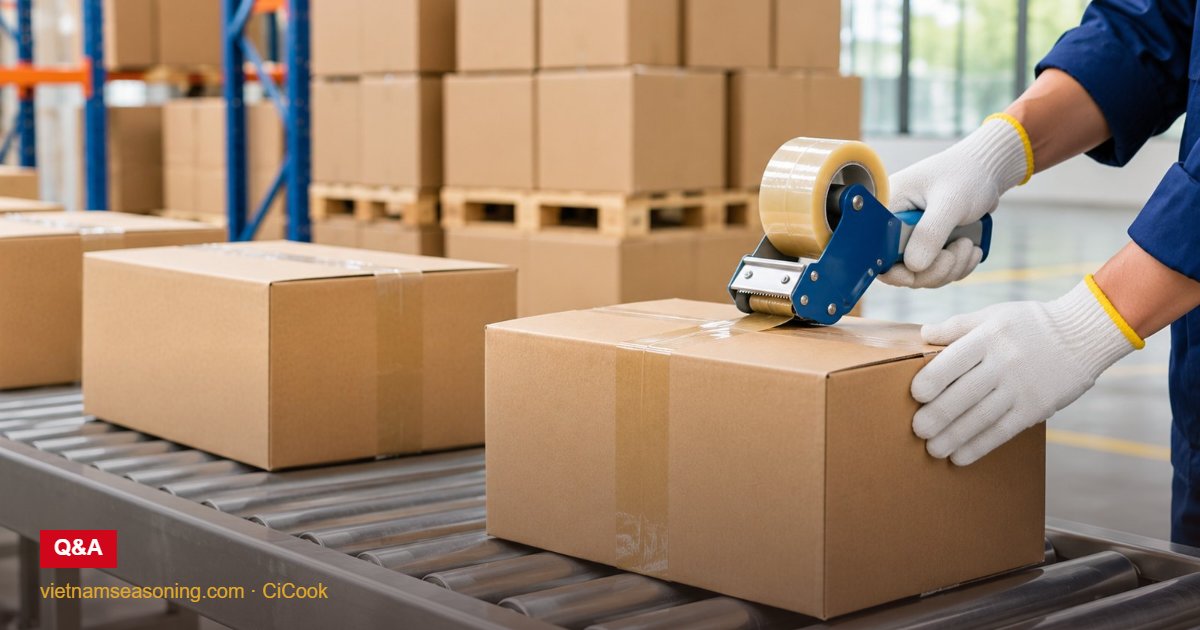
FOB, CIF, FCA or DAP? A plain guide to choosing an Incoterms 2020 rule when importing a container of Vietnamese sauces.
For containerised sauce shipments from Vietnam, FCA, CPT or CIP often fit better than FOB, CFR or CIF, because containers are usually handed to the carrier before they are loaded on board. Choose the rule by who books freight, who insures the goods and who clears import customs.
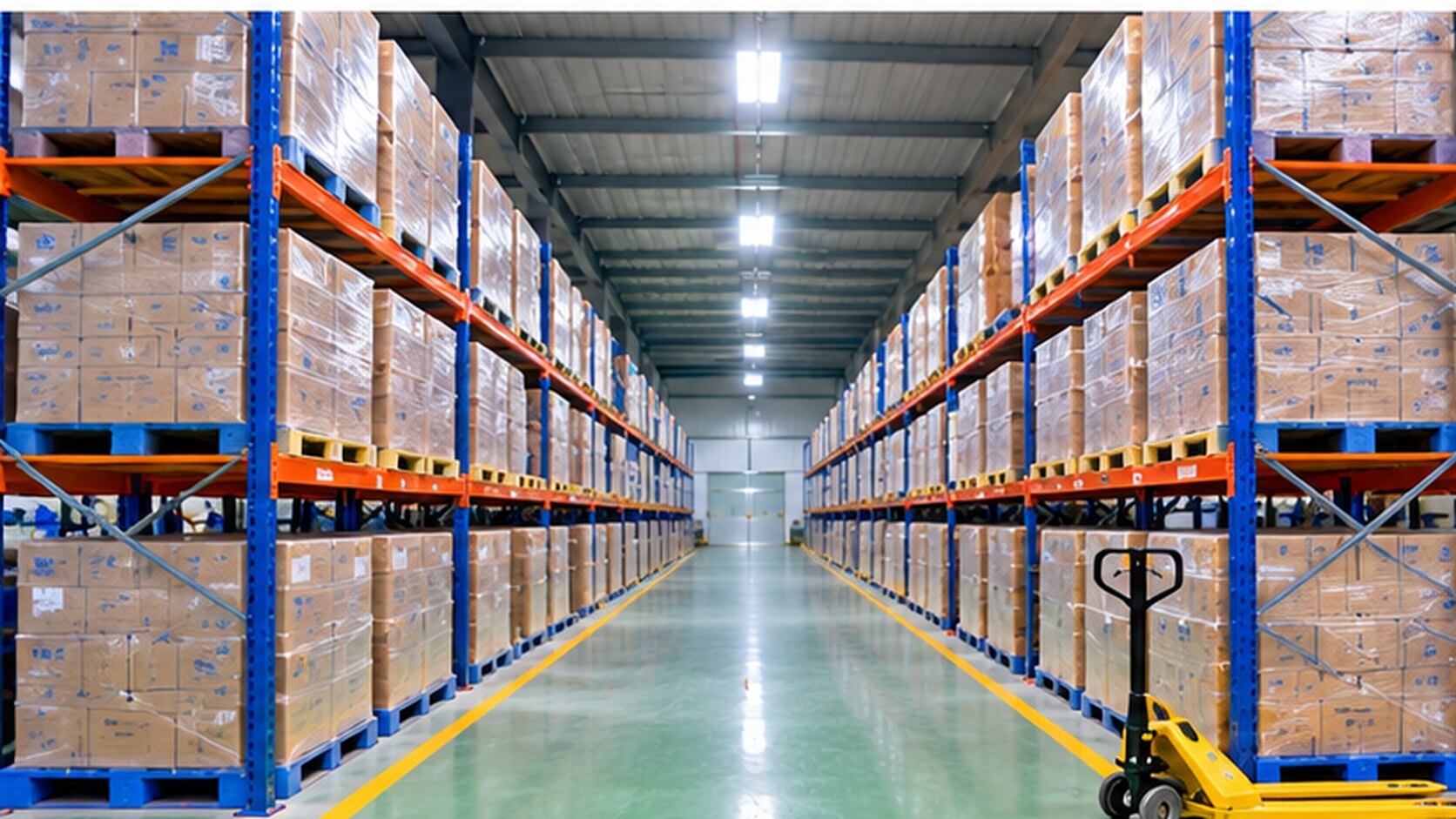
Racks of boxed goods in a warehouse aisle, the kind of place where export cartons wait for pickup (illustrative photo)
1. What do Incoterms decide in a sauce import deal?
Incoterms decide who arranges and pays each part of the journey, where risk passes from seller to buyer, and who handles export and import clearance. The International Chamber of Commerce (ICC) publishes the rules; the current edition, Incoterms 2020, has 11 rules, according to the US International Trade Administration.
Seven rules work for any mode of transport and four are for sea and inland waterway only. Incoterms do not say when ownership passes or how and when the buyer pays, so those points need their own clauses in the sales contract.
2. Incoterms 2020 at a glance for sauce importers
The table summarises where risk passes and who carries the main tasks under each rule, based on the US International Trade Administration and the IHK Giessen-Friedberg chamber of commerce in Germany.
| Rule | Transport mode | Risk passes to buyer | Main freight paid by | Export clearance | Import clearance |
|---|---|---|---|---|---|
| EXW | Any | Goods made available at the seller's named place | Buyer | Buyer | Buyer |
| FCA | Any | Goods handed to the buyer's carrier at the named place | Buyer | Seller | Buyer |
| FOB | Sea only | Goods on board the ship at the port of shipment | Buyer | Seller | Buyer |
| CFR / CIF | Sea only | Goods on board the ship; seller pays freight to the destination port (CIF adds insurance) | Seller | Seller | Buyer |
| CPT / CIP | Any | Goods handed to the seller's carrier; seller pays carriage to the named destination (CIP adds insurance) | Seller | Seller | Buyer |
| DAP / DPU | Any | Goods at the named destination, ready for unloading (DAP) or unloaded (DPU) | Seller | Seller | Buyer |
| DDP | Any | Goods unloaded at the named destination | Seller | Seller | Seller |
FAS, the fourth sea-only rule, is rarely used for packed sauces and is left out. Sources: trade.gov; IHK Giessen-Friedberg.
2.1 Is FOB wrong for a container of sauces?
Not wrong, but often a poor fit. IHK Giessen-Friedberg notes that FOB does not suit cases where goods are handed to the carrier before they are on board, which is normal for containers, and describes FCA as well suited to container transport. The same chamber advises CPT instead of CFR and CIP instead of CIF for container shipments.
2.2 Does CIF mean my sauces are fully insured?
No. Under CIF and CIP the seller arranges transport insurance with minimum cover, and the 2020 edition adjusted the cover levels to current practice, IHK notes. Check the policy against the value of your goods and buy extra cover if you need it.
3. Where do importers get caught out?
Most problems come from a rule that does not match how the goods actually move.
- FOB on a container. The sealed container often reaches the terminal before loading, but on paper risk stays with the seller until it is on board.
- EXW with export formalities. Under EXW the buyer handles export clearance in Vietnam; IHK advises caution where declarations or permits are needed and suggests FCA instead.
- DDP abroad. DDP puts import clearance in the destination country on the seller, which a foreign supplier may not be set up to do.
- Vague places. Every rule needs a named place or port; "FOB Vietnam" leaves room for dispute.
4. How should you write Incoterms into a sauce contract?
- Name the edition and place. Write the rule, the exact place and the edition, for example "FCA [named terminal], Incoterms 2020".
- Match the rule to the freight booking. If your forwarder books the ship, use an F rule; if the supplier books it, use a C rule. Our note on container freight rates for sauce importers explains what drives that cost.
- Decide insurance separately. Under CIF or CIP, agree the cover you need; under other rules, the party at risk should insure.
- Add payment and title clauses. Incoterms cover neither, so state them in the contract.
- Link documents and checks to the delivery point. Agree which export documents for Vietnamese sauces the seller provides, and schedule any pre-shipment inspection before risk passes.
5. What this means for importers and brands
For private-label and distribution buyers, the right rule is the one that matches who controls freight, insurance and customs at each step. CiCook makes OEM, ODM and private-label sauces in an FDA-registered facility and issues a COA for every batch.
FAQ
How many Incoterms 2020 rules are there?
Eleven: seven for any mode of transport (EXW, FCA, CPT, CIP, DAP, DPU, DDP) and four for sea and inland waterway (FAS, FOB, CFR, CIF).
Do Incoterms say when the buyer has to pay?
No. Incoterms do not cover payment terms or the transfer of ownership; agree those separately in the sales contract.
Planning a sauce order from Vietnam? Contact CiCook or message WhatsApp +84 813 378 398.