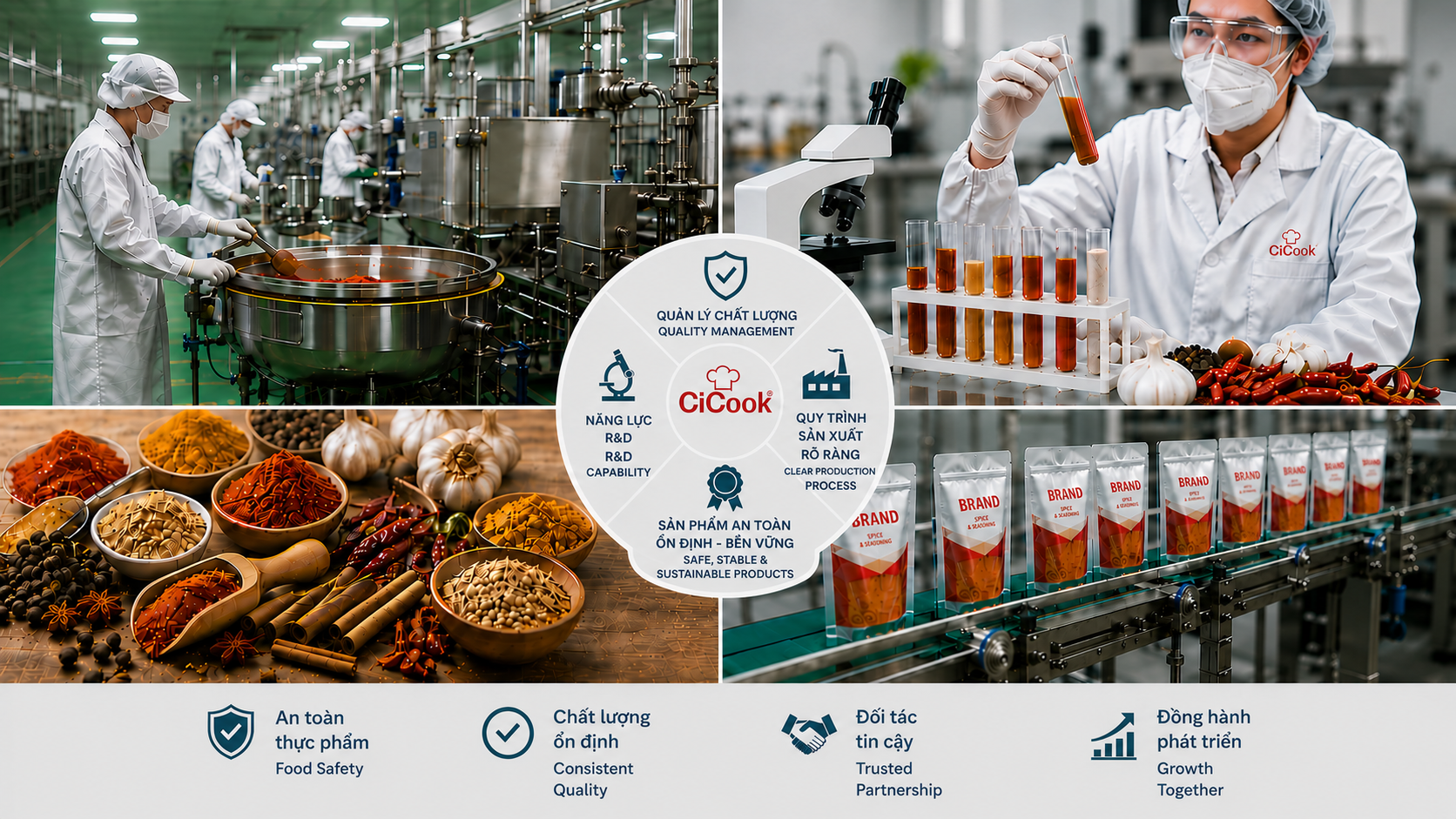
High-quality seasoning manufacturing is key to staying competitive in today’s demanding market. CiCook provides end-to-end ODM/OEM solutions with strict quality control, traceable ingredients, and international manufacturing standards to ensure consistent product quality.
When Quality Becomes a Brand's Competitive Advantage
Vietnam's seasoning market is experiencing rapid growth, driven by the emergence of new brands, F&B chains, and food manufacturers. However, alongside these opportunities comes a major challenge: maintaining consistent product quality.
Today's consumers pay closer attention to ingredient origins, food safety, and product consistency. Even a minor quality issue can significantly impact a brand's reputation.
As a result, seasoning manufacturing is no longer simply about producing products based on customer orders—it has evolved into a comprehensive quality management process.
Challenges Facing the Seasoning Industry
Inconsistent Product Quality
Many seasoning products on the market suffer from issues such as:
-
Differences between production batches
-
Flavor variations caused by raw materials
-
Inconsistent color and solubility
-
Difficulty maintaining quality as production scales up
These issues are especially critical for restaurant chains and food brands expanding their operations.
Poorly Controlled Raw Materials
Raw materials play a decisive role in determining seasoning quality.
Without strict quality control, manufacturers may encounter:
-
Inconsistent moisture levels
-
Variations in active ingredient content
-
Microbial contamination risks
-
Chemical residues exceeding safety limits
Selecting reliable suppliers and implementing rigorous raw material inspections are therefore essential.
Increasing Consumer Expectations
Modern consumers are increasingly concerned about:
-
Natural ingredients
-
Clean-label formulations
-
Ingredient traceability
-
Manufacturing standards
-
Food safety certifications
As a result, businesses must invest more in product quality rather than competing solely on price.
The Role of a Professional Seasoning Manufacturer
A modern seasoning manufacturing facility does much more than produce products—it manages quality throughout the entire production process.
Raw Material Quality Control
Every incoming ingredient is evaluated based on:
-
Sensory characteristics
-
Moisture content
-
Microbiological standards
-
Traceability documentation
Only qualified materials are approved for production.
Formula Development and Standardization
An experienced R&D team helps:
-
Develop stable formulations
-
Maintain consistent flavor profiles
-
Adapt recipes to different markets
-
Ensure consistency across production batches
In-Process Quality Control
Every production stage is closely monitored, including:
-
Ingredient weighing
-
Blending and mixing
-
Sterilization
-
Packaging
-
Finished product inspection
Strict process control minimizes production errors and ensures consistent product quality.
Quality Is a Brand's Competitive Advantage
Today's consumers have countless choices. To build a sustainable seasoning brand, products must consistently deliver three key values:
Consistent Taste
Consumers expect every purchase to deliver the same great flavor experience.
Food Safety
Products must comply with current food safety regulations and international manufacturing standards.
Transparent Traceability
Clear ingredient sourcing builds trust and strengthens consumer confidence.
Future Trends in Seasoning Manufacturing
The industry is shifting from a "low-cost production" mindset to a "quality-first manufacturing" approach.
Key trends include:
-
Natural seasonings
-
Clean-label formulations
-
Reduced additives
-
Full ingredient traceability
-
International manufacturing standards
-
Advanced quality management systems
For emerging brands, partnering with a manufacturer that has strong quality management capabilities can significantly reduce business risks while improving long-term competitiveness.
Conclusion
Seasoning manufacturing is no longer just about production—it is about delivering consistent quality, product reliability, and protecting brand reputation.
In today's increasingly competitive market, businesses should choose manufacturing partners with robust quality management systems, strong R&D capabilities, and transparent production processes to create safe, consistent, and sustainable products.
Frequently Asked Questions
1. Why is seasoning quality often inconsistent?
Quality variations are usually caused by inconsistent raw materials, unstandardized formulations, or inadequate production process control.
2. Should small businesses invest in quality management?
Absolutely. Consistent quality is the foundation for building a trusted brand and retaining customers.
3. How can businesses evaluate a reliable seasoning manufacturing partner?
Businesses should assess the manufacturer's R&D capabilities, quality control system, production facilities, certifications, and proven industry experience.
#CiCook #CiCookFactory #ODMManufacturing #OEMManufacturing #SeasoningSolutions #PrivateLabel #ChefLessSolution #FranchiseInABox #ISO22000 #HACCP #FDACertified #FlavorEngineering #ProfessionalManufacturing