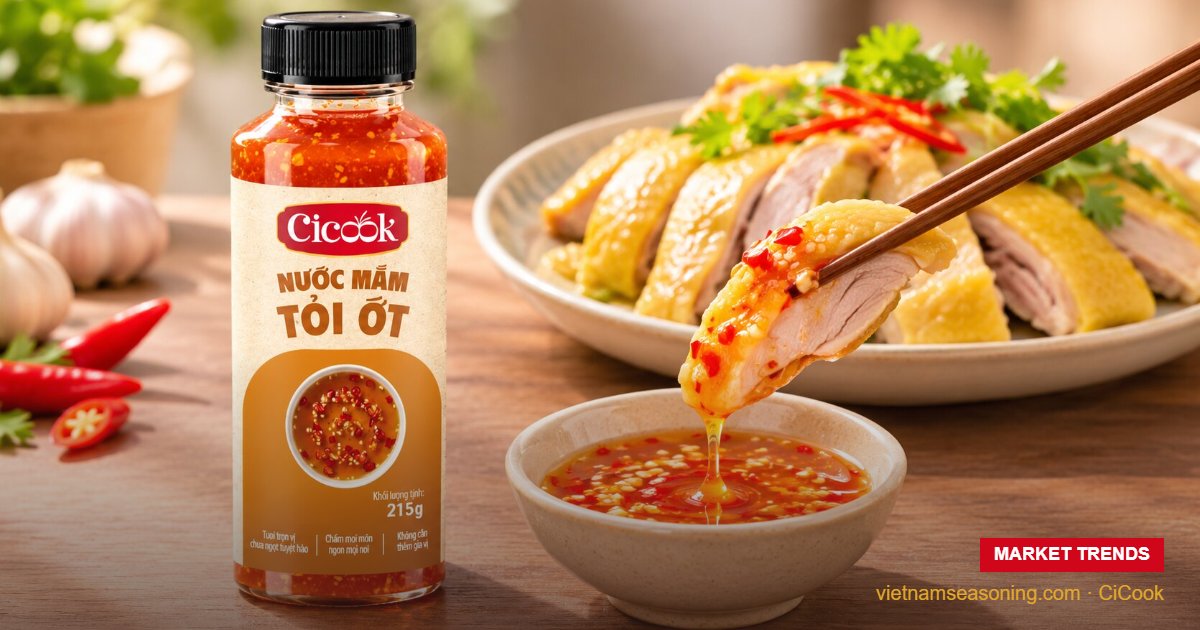
MorganMyers, Datassential and the Specialty Food Association have published their 2027 forecasts. Here is what they mean for sauce sourcing.
Three US trend reports for 2027 point sauce buyers in one direction. MorganMyers named black garlic its flavor of the year with chili crisp second, Datassential calls chili crisp a "New Classic", and the Specialty Food Association expects affordable flavor upgrades and traceable products to sell.
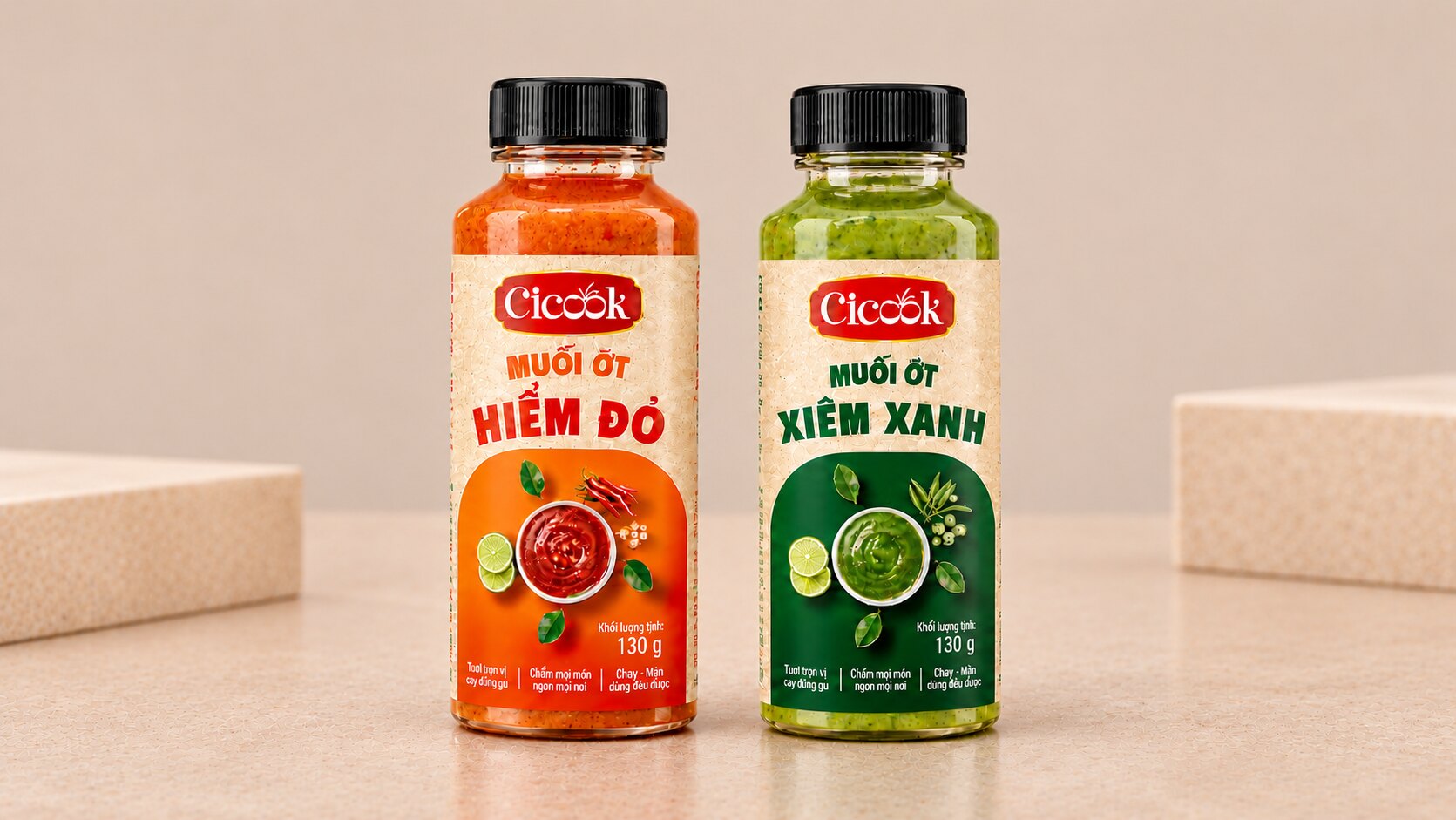
Red and green chili salt bottles (AI-generated illustration)
1. What do the 2027 food trend reports say?
The newest report came from the Specialty Food Association (SFA) on 16 November 2026. It named four trends for 2027: Instant Elevation, Honest Fueling, Vanity Fare and Human-Coded. Under Instant Elevation, the SFA notes that grocery prices are up 29% since 2020 and gives the example of a $9 chili crisp turning a $2 bowl of rice into something worth posting. Under Human-Coded, it says trust is moving to evidence that AI cannot generate, such as a named maker, a harvest date or a batch code.
In its 2027 Food & Flavor Trends Report, covered by The Food Institute on 19 October 2026, the food and agriculture marketing agency MorganMyers ranked black garlic first, followed by chili crisp, labneh, sumac and dates. Its wider list of ten also includes manuka honey, espresso, masa corn, koji and dragon fruit. On 8 November 2026 Thailand's The Nation reported the ranking through the Thai Trade Center in Chicago, which uses it to advise Thai food exporters.
Datassential, a food and beverage intelligence firm, released highlights of its own 2027 Trends Report on 7 October 2026. According to The Shelby Report, chili crisp is one of the trends it now classes as "New Classics", alongside whipped feta, sticky toffee pudding, hibiscus and dirty soda. Its "foods and flavors to watch" include buldak, the Korean spicy chicken in a gochujang and chile sauce, and doubanjiang, the fermented fava bean and chile paste of Sichuan cooking.
2. What do the reports agree on?
All three mention chili crisp, and the two flavor lists reward bold heat, savory depth and fermentation. The table puts the sauce-relevant items of the two flavor reports side by side; the SFA forecast is discussed below it.
| Point | MorganMyers 2027 Food & Flavor Trends | Datassential 2027 Trends Report |
|---|---|---|
| Released / reported | Reported 19/10/2026 (The Food Institute) and 08/11/2026 (The Nation) | Released 07/10/2026; reported 10/10/2026 (The Shelby Report) |
| Headline item | Black garlic, flavor of the year | Chili crisp among the "New Classics" |
| Heat | Chili crisp ranked second | Chili crisp; buldak (gochujang and chile sauce) |
| Fermentation | Black garlic (described as naturally fermented); koji | Doubanjiang; koji milk; makgeolli |
| Acidity and fruit | Sumac; dates; dragon fruit | Vietnamese lemonade made with salted preserved citrus; kinilaw |
| Data points given | US retail sales of dates up about 30% in 2025 | 75% of consumers say they look forward to new food and beverage trends |
| Sample size published | Not stated in the coverage | Not stated in the coverage |
Sources: The Food Institute (19/10/2026), The Nation (08/11/2026), The Shelby Report (10/10/2026), PR Newswire (07/10/2026).
2.1 Why does black garlic matter for sauces?
Because the report says packaged products are carrying it to a wider audience. MorganMyers writes that retail sauces, seasonings and condiments are helping move black garlic out of fine dining, and describes its taste as close to molasses and balsamic. That makes it a flavor brands can add to existing formats, such as marinades and dipping sauces, rather than a new category.
2.2 Why does the SFA stress batch codes and named makers?
Because it expects shoppers to trust proof over polish. The SFA says it reached its predictions by examining specialty retail trends, consumer purchasing data and wider cultural conversations. For sauce brands, its Human-Coded trend points to details a factory already holds: batch codes, production dates and a traceable origin story.
2.3 Do the reports mention Vietnamese flavors?
Only once. Datassential's first beverage watch list includes Vietnamese lemonade made with salted preserved citrus. No Vietnamese sauce is named in any of the three reports, so any link between these trends and Vietnamese products is a brand's own interpretation, not a forecast.
3. What are the risks of chasing a flavor trend?
The main risk is treating a trend list as demand data. The coverage of the two flavor reports gives no survey sample size, and all three are compiled for the US market, so they show direction rather than volume.
- Late entry. Datassential already counts chili crisp as a "New Classic", meaning it has moved past the early stage; MorganMyers says it has "moved well beyond niche retail".
- Crowded shelves. A trend that has reached mainstream retail usually means more competing products and stronger price pressure.
- Product behavior. Oil-based condiments and fermented ingredients behave differently from standard sauces in storage, so shelf-life and process questions need answering before launch, not after.
- Names and claims. Trend names such as "chili crisp" describe a style, not a standard; labels still have to describe the actual product and meet the destination market's rules.
4. How can buyers test a trend sauce before committing?
Run a short, documented test rather than a full launch. A vendor-neutral checklist:
- Start from a local formula, not a copy. Map the trend to a flavor your supplier already makes well. For chili crisp that might be a chili-garlic oil; for fermentation, a sauce built on fish sauce or fermented soybeans. Our range of Vietnamese dipping sauces shows the kind of base formats that exist.
- Benchmark against one retail product. Agree in writing which product and which attributes (heat, crunch, oil ratio, saltiness) the sample must match or beat, and record them in a sauce specification sheet.
- Put storage questions into the spec. Ask for the shelf-life basis, storage conditions and how oil separation or texture changes are handled over time.
- Make traceability visible. Agree how batch codes and production dates appear on pack, since the SFA expects shoppers to look for that kind of proof.
- Size the first run to the evidence. With no published sample sizes, a small trial order is a safer test than a container. Retail data such as the growth in US store-brand sales can help judge where a private-label version would sit.
5. What this means for importers and brands
For importers, the 2027 lists are a prompt to review which garlic-forward, chili and fermented sauces fit their range, and to test them with clear specifications. CiCook, an FDA-registered, ISO 22000:2018 and HACCP-certified manufacturer of dipping sauces, BBQ marinades and hotpot bases, develops OEM, ODM and private-label formulas under NDA.
FAQ
What is chili crisp?
It is a Chinese-style condiment of fried chilies, onion, garlic and spices in oil, used on noodles, eggs, pizza, dressings and sauces, according to The Nation's coverage of the MorganMyers report.
Are 2027 trend reports reliable for sourcing decisions?
They are useful for direction, not volume. The coverage of the MorganMyers and Datassential reports gives no survey sample sizes, and all three focus on the US, so confirm demand with your own sales or retail data.
Exploring a trend-led sauce line? Contact CiCook or message WhatsApp +84 813 378 398.
References
- Specialty Food Association (16/11/2026): Specialty Food Association unveils 2027 trends forecast
- The Food Institute (19/10/2026): 10 emerging flavor trends for 2027
- The Nation (08/11/2026): Black garlic named flavour of the year for 2027 in food trends report
- The Shelby Report (10/10/2026): Datassential predicts 2027 food, flavor and beverage trends
- PR Newswire (07/10/2026): Datassential releases food, flavor, beverage trend predictions for 2027