Korean sauce exports to Vietnam grew about 5.5-fold in ten years, led by restaurant chains. What the data and FTA tariffs mean for sauce brands.
Korean exports of sauces and mixed condiments to Vietnam rose from $3.99 million in 2015 to $21.79 million in 2025, about 5.5 times, according to UN Comtrade data reported by Seoul Economic Daily. Restaurant chains drive most of the demand, and FTA rules of origin can cut Vietnam's 20–32% tariffs to zero.
The figures come from a Seoul Economic Daily report filed from Hanoi on 26 October 2026 as part of a series on Korean sauces abroad. The story is about Korea, but its lessons apply to any Asian sauce brand selling into a fast-growing market: who really buys, what tariffs cost, and how quickly local makers copy a winning flavour.
1. How fast are Korean sauce exports to Vietnam growing?
About 5.5-fold in ten years. Citing UN Comtrade data for the category "other sauces and mixed condiments", the newspaper reports Korean exports to Vietnam of $3.99 million in 2015, $11.7 million in 2020 and $21.79 million last year. The products named in the story include gochujang, soy sauce, doenjang, ssamjang, sesame oil, bulgogi and galbi marinades, and kimchi seasoning.
2. Key figures at a glance
| Indicator | Value | Note |
|---|---|---|
| Korean sauce and mixed-condiment exports to Vietnam, 2015 | $3.99 million | UN Comtrade, as reported |
| Same, 2020 | $11.7 million | About 2.9 times 2015 (our calculation) |
| Same, 2025 | $21.79 million | About 1.9 times 2020 (our calculation) |
| Vietnam's tariff on these sauces | 20–32% | Zero when Korea–Vietnam FTA rules of origin are met |
| Tariff saved by one Korean chicken chain (BBQ) | Over 30 million won a year | Company figure quoted in the report |
Source: Seoul Economic Daily, 26 October 2026.
3. Who is buying Korean sauces in Vietnam?
Mostly restaurants. The report says demand rises with the spread of Korean restaurant chains, such as Dookki tteokbokki in Hanoi, and that franchise sauce demand is the main driver; home use is growing but remains small next to the restaurant market. In retail, the reporters found gochujang and ssamjang prominently placed at GO! Thang Long in Hanoi and Korean fermented pastes at AEON Long Bien.
Two more points matter for any exporter. The report notes that Vietnamese consumers want the original Korean flavour, and Daesang noted that local brands are now launching Korean-style seasoning sauces and kimchi seasonings. Authenticity wins the first order; local competition follows.
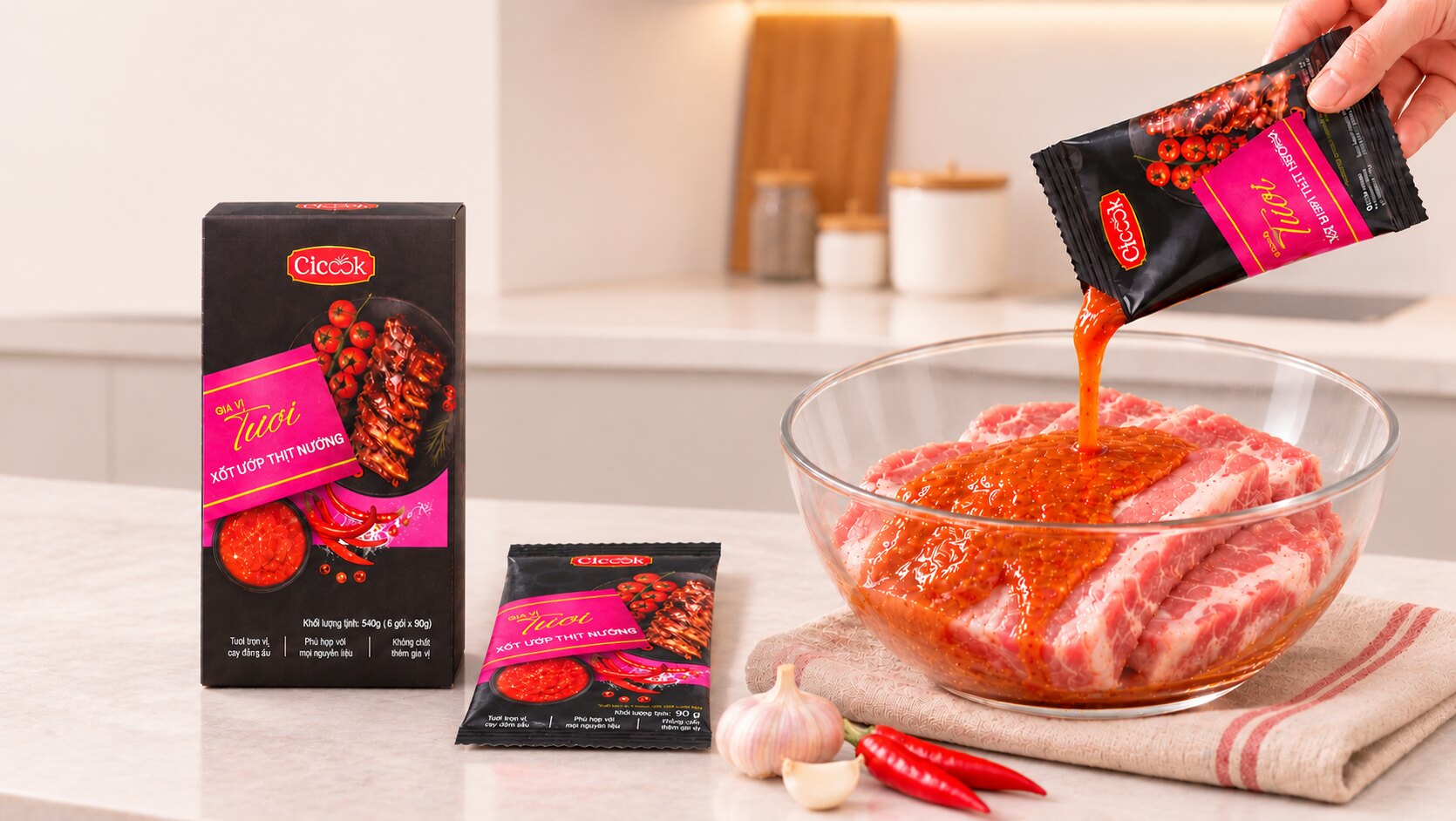
Red marinade poured from a sachet onto raw pork ribs in a glass bowl (Illustrative photo).
4. What can other sauce exporters learn from this?
Tariffs and channels decide the margin more than flavour alone. At 20–32%, Vietnam's duty on sauces is high enough that qualifying under a free trade agreement changes the price on the shelf. The report says BBQ's sauce exports to Vietnam through the third quarter of 2026 already exceeded its previous annual average of $100,000, a sign of what restaurant-led volume looks like.
4.1 The restaurant-first pattern
In the Korean case, franchise kitchens created the volume and introduced the flavour to diners, while home use is still catching up. Supplying chains first gives a brand steady orders before it fights for shelf space.
4.2 The copycat risk
Once a flavour is popular, local makers launch their own versions at local prices. Clear origin, consistent quality and a recognisable taste are the defence.
5. Practical checklist for sauce brands entering a new Asian market
- Follow the restaurants: list the chains serving your cuisine in the target city and what sauces they import.
- Check rules of origin for every free trade agreement on the route, and budget for the certificate of origin before quoting.
- Split pack formats: bulk or foodservice packs for chains, smaller retail packs once shelf demand appears.
- Protect the original taste: keep a fixed specification and batch records so every shipment tastes the same.
- Watch local launches in hypermarkets every quarter to spot imitations early.
6. What this means for importers and brands
The Korean data show restaurant menus opening the door for a foreign sauce; for background, see our article on Korean seasonings and Vietnamese consumer trends. For importers, grilling sauces are a natural entry point, from Vietnamese barbecue sauces and marinades to dipping sauces, and landed cost depends on tariffs as much as on container freight for sauce importers.
CiCook makes BBQ marinades, dipping sauces and hotpot bases under OEM, ODM and private label, with customer formulas protected by NDA.
FAQ
Why are Korean sauces growing in Vietnam?
According to the report, mainly because Korean restaurant chains are expanding and buy sauces in volume; home cooking with Korean sauces is growing from a smaller base.
How can a free trade agreement remove sauce tariffs?
The report says Vietnam's 20–32% duties on these sauces fall to zero when the Korea–Vietnam FTA rules of origin are met, which requires proof of origin for each shipment.
Planning a sauce line for restaurants or retail? Contact CiCook or message WhatsApp/Zalo +84 824 084 408.