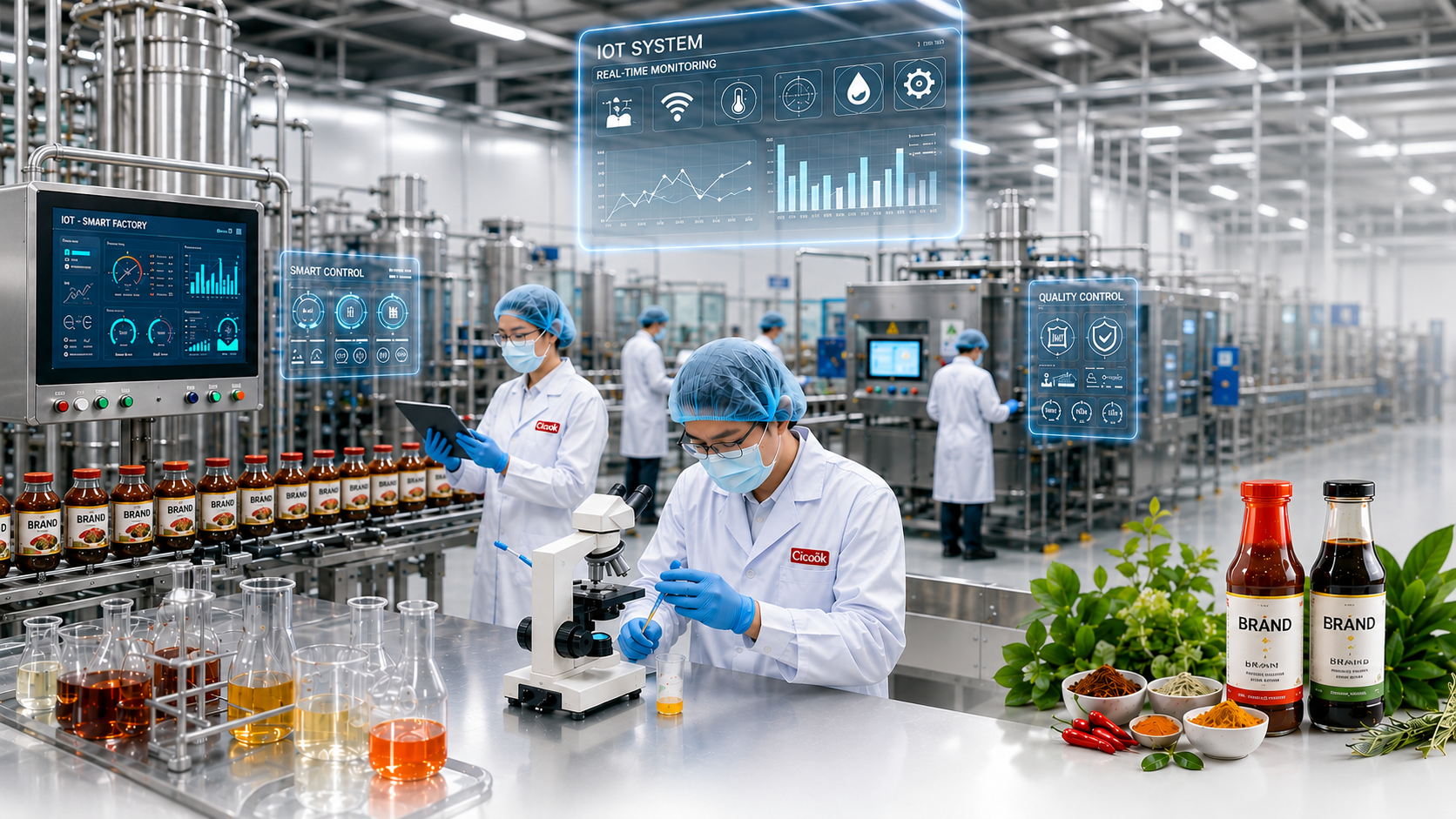
To stand out in a competitive market, seasoning manufacturers must strengthen R&D, improve quality standards, adopt advanced technologies, and create differentiated products. CiCook offers comprehensive ODM/OEM solutions that help businesses innovate, optimize operations, and enhance brand value.
As the food industry enters 2026, rising consumer expectations and increasingly stringent international standards are pushing Vietnam's seasoning manufacturing sector to transform. Today, outstanding flavor alone is no longer enough—comprehensive quality has become the key to long-term competitiveness and sustainable growth.
Here are the five critical areas every seasoning manufacturer should prioritize:
1. Upgrade to Clean Label Standards
Modern consumers carefully examine ingredient lists and are willing to abandon even long-established brands if they discover artificial additives.
Improvement:
-
Replace synthetic food colorings with natural extracts from fruits and vegetables.
-
Reduce salt and sugar content.
-
Prioritize healthier, naturally sourced ingredients.
Goal:
Build lasting consumer trust through transparent, concise, and clean ingredient labels.
2. Digitalize Product Traceability
Transparency has become one of the most valuable assets for food brands. Consumers want to know where their pepper was grown and what fish was used to produce their fish sauce.
Improvement:
Implement QR codes on product packaging, allowing customers to trace the entire production journey—from farm to factory.
Goal:
Transform from traditional manufacturing into smart manufacturing while strengthening credibility in both e-commerce and export markets.
3. Invest Heavily in R&D and ODM/OEM Manufacturing
The F&B industry evolves rapidly, and seasoning manufacturers must move beyond competing solely on low-cost contract manufacturing.
Improvement:
Strengthen R&D laboratories and focus on customized flavor development. Companies like CiCook are leading this model by enabling F&B brands to create exclusive recipes without investing in their own production facilities.
Goal:
Become a strategic partner that empowers restaurant chains and F&B startups to develop signature flavors instead of relying on mass-produced products.
4. Embrace Automation for Absolute Product Consistency
One of the greatest challenges for expanding restaurant chains is maintaining consistent flavor across every production batch.
Improvement:
Adopt IoT technologies and automated systems throughout cooking, blending, and filling processes to eliminate human error.
Goal:
Ensure that every bottle—from batch 1,000 to batch 1,000,000—delivers the same standardized taste, giving businesses the confidence to scale without compromising quality.
5. Evolve from Supplier to Solution Partner
Competing on price alone is no longer sustainable. Seasoning manufacturers must enhance customer support and value-added services.
Improvement:
Provide comprehensive solutions, including:
-
Customized R&D consultation
-
Regulatory documentation support
-
Packaging optimization for e-commerce and export markets
Goal:
Build long-term, mutually beneficial partnerships where both manufacturers and clients grow together as customer brands succeed.
Conclusion
The future of the seasoning industry in 2026 will not be shaped by minor improvements, but by a complete shift in manufacturing mindset. Companies that successfully combine advanced technology—including automation and digitalization—with clean ingredients, transparent sourcing, and strong ODM/OEM capabilities, such as CiCook, will become the industry leaders of tomorrow.
Frequently Asked Questions
1. Why is adopting the Clean Label trend essential for seasoning manufacturers in 2026?
As consumers become increasingly health-conscious and ingredient-aware, Clean Label is no longer just a marketing trend—it is the foundation for building trust. Brands that fail to provide transparent ingredient lists risk losing customer confidence and being excluded from purchasing decisions.
2. How can seasoning manufacturers leverage the ODM model to create a competitive advantage for their clients?
By offering customized R&D solutions, companies like CiCook help clients develop exclusive formulations, shorten product development cycles, and establish signature flavors without the significant investment required to build manufacturing facilities.
3. Why is automation (IoT and automated production) the key to scaling restaurant chains and food brands?
Automation eliminates human error during blending and filling, ensuring absolute flavor consistency across every production batch. This consistency provides a solid foundation for businesses to expand while maintaining the same product quality and customer experience.
#CiCook #CiCookFactory #ODMManufacturing #OEMManufacturing #FreshSeasonings #PrivateLabel #ChefLessSolution #FranchiseInABox #ISO22000 #HACCP #FDACertified #DigitizingFlavor #ProfessionalStandardizedKitchen