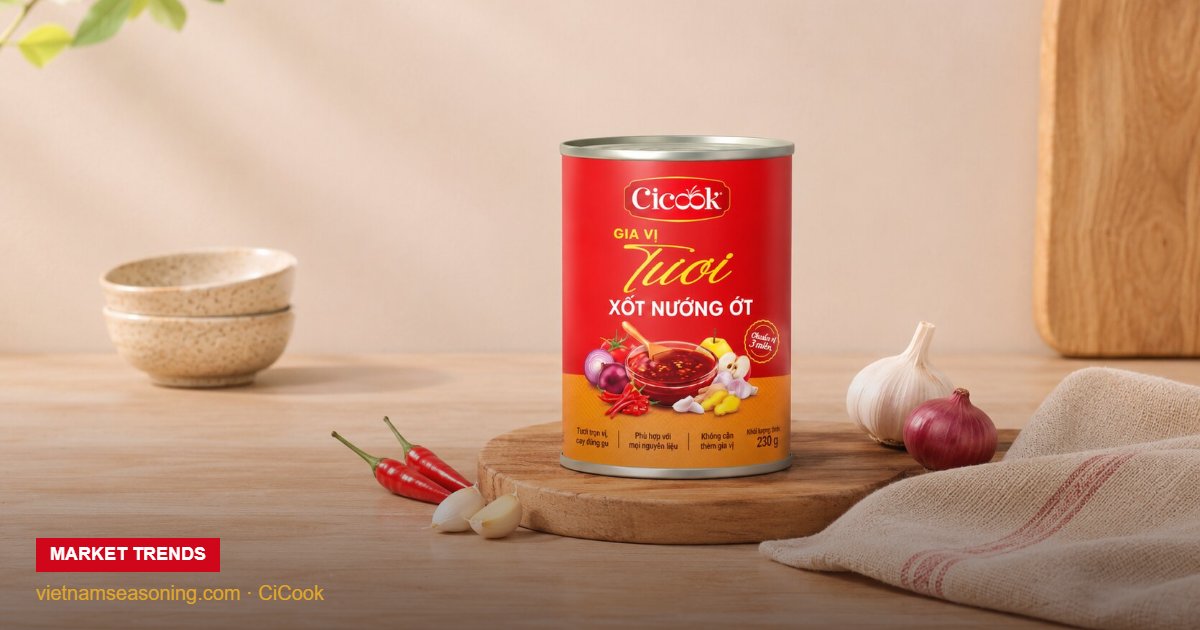
New EU packaging and BPA rules now apply. Here is what Vietnamese sauce exporters should check on cans, jars, pouches and sachets.
The EU Packaging and Packaging Waste Regulation (EU) 2025/40 has applied since 12 August 2026, and the main transition period of the EU ban on bisphenol A in food contact materials ended on 20 July 2026. For Vietnamese sauce exporters, can coatings, sachets and recyclability now shape EU market access.
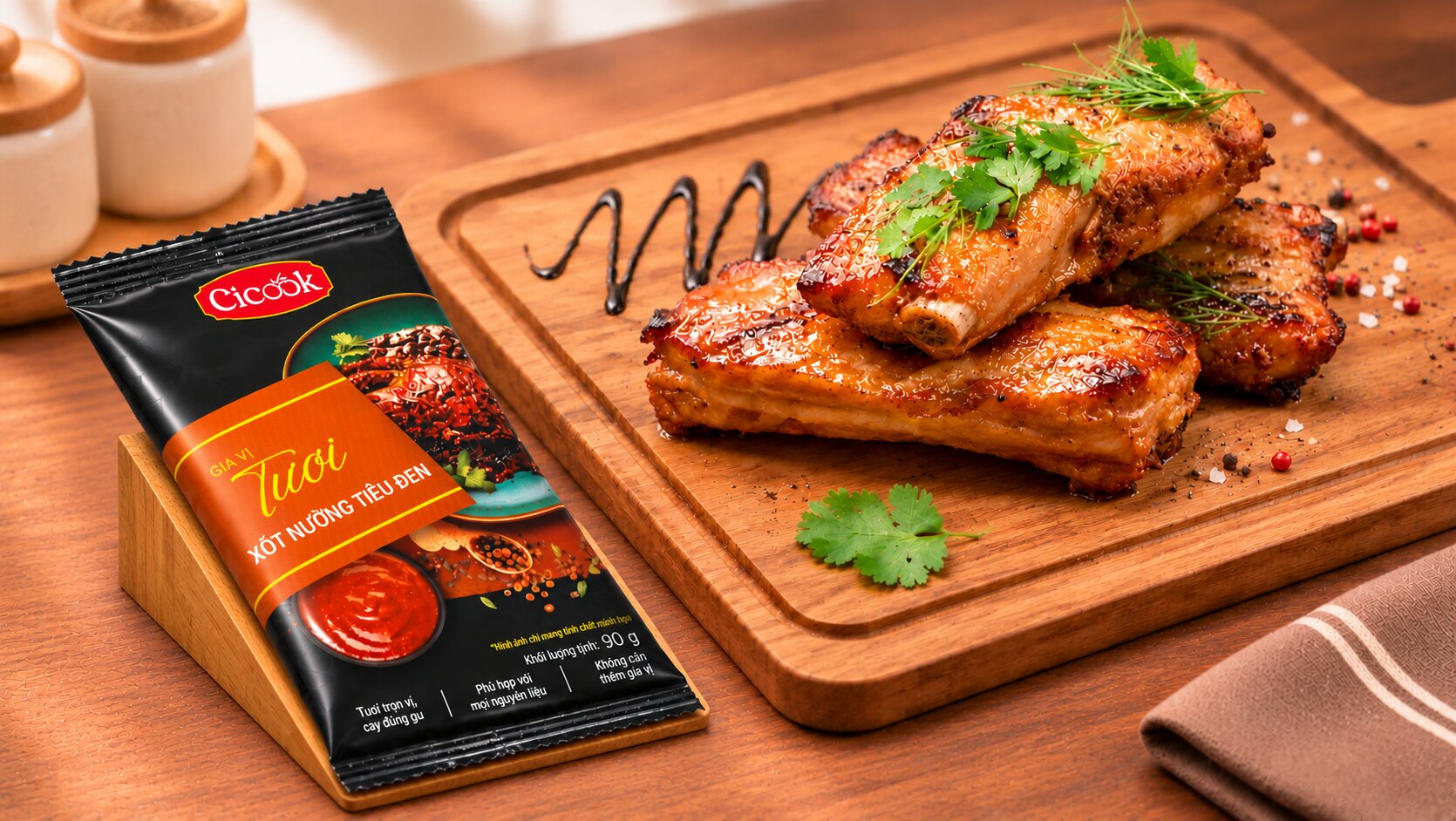
A sauce pouch beside grilled ribs on a wooden board (AI-generated illustration)
1. Why is packaging now an EU market-access issue?
Because two EU rules changed the packaging baseline in 2026. Speakers at the Vietnam Food Forum 2026, held in Ho Chi Minh City on 11 November by the Vietnam Trade Promotion Agency (Vietrade) and partners, described the EU as a top potential market for Vietnamese food but said its packaging rules add a new layer of requirements, VietnamPlus reported on 12 November.
The forum, co-organised with the Swiss Import Promotion Programme (SIPPO) and the Vietnam Packaging Association, ran as part of Vietnam Foodexpo under the theme of sustainable packaging and export compliance. A SIPPO expert listed food safety, private label, health food and sustainability, including packaging, as the EU trends suppliers must watch.
2. The EU packaging rules at a glance
The table summarises the dates that matter for sauces, compiled from official EU sources.
| Rule | Key date | What it means for sauces |
|---|---|---|
| Packaging and Packaging Waste Regulation (EU) 2025/40 | In force 11 Feb 2025; applies from 12 Aug 2026 | One set of packaging rules for all packaging placed on the EU market, whatever its origin |
| Recyclability goal | By 2030 | All packaging on the EU market should be recyclable in an economically viable way |
| Single-serve formats (Article 25, Annex V point 4) | From 1 Jan 2030 | Single-use plastic individual portions of condiments, sauces and seasoning in the HORECA sector restricted, except with take-away food and in some care settings |
| Substances of concern | Under the regulation | PFAS in food contact packaging restricted above set thresholds |
| BPA ban, Regulation (EU) 2024/3190 | From 20 Jan 2025; main transition ended 20 Jul 2026 | BPA banned in food contact materials, including coatings on metal cans |
| BPA exception for some cans | Until 20 Jul 2028 | Single-use packaging coated with BPA for preserving fruit, vegetables and processed fish products |
Sources: European Commission (DG Environment, DG Trade Access2Markets) and Regulation (EU) 2025/40 on EUR-Lex.
2.1 Are sauce sachets banned in the EU?
Not across the board. Annex V of the regulation targets single-use plastic packaging with individual portions of condiments, sauces and seasoning used in the HORECA sector, such as restaurants and cafés, from 1 January 2030. It does not apply when the sachet comes with take-away food, or where it is needed for hygiene in hospitals, clinics or nursing homes.
2.2 Does the BPA ban affect canned sauces?
Yes. The ban covers varnishes and coatings, including those on metal cans. Single-use articles made under the old rules could be placed on the market until 20 July 2026, may still be filled and sealed for 12 months after that, and the packed food can be sold until stocks run out. The longer exception to 2028 names fruit, vegetables and processed fish products only.
3. What are the risks for Vietnamese sauce exporters?
The main risk is packaging that was compliant when designed but no longer matches EU rules. Speakers at the forum said compliance now runs from product quality through processing, packaging, transport and distribution.
- Old can stock. Cans or lids with BPA-based coatings bought before the ban may run out of their transition window.
- Foodservice portions. Plastic sachets sold to EU restaurants for on-premise use face the 2030 restriction.
- Recyclability. Multi-layer pouches and mixed materials may need redesign to meet the 2030 recyclability goal.
- Paperwork. Buyers expect declarations from packaging suppliers, not verbal assurances; Vietrade's deputy director general said access depends on SPS compliance and credible documentation.
4. How should exporters prepare EU packaging?
Start with the packaging supplier, then the buyer. A vendor-neutral checklist:
- Ask for a BPA statement. Request written confirmation that can coatings, lids and inks comply with Regulation (EU) 2024/3190, plus the date the material was made.
- Map each SKU by channel. Separate retail packs from foodservice portions, since the 2030 sachet restriction applies to HORECA use.
- Check materials for recyclability. List every layer of pouches and labels and ask your EU importer which formats their customers accept; our guide to packaging costs and shelf life covers the trade-offs.
- Confirm PFAS status. Ask paper and board suppliers whether grease-resistant layers use PFAS.
- File the evidence. Keep packaging declarations with the rest of your export documents for Vietnamese sauces.
5. What this means for importers and brands
For EU importers and private-label brands, packaging is now part of supplier approval, especially for canned products such as Vietnamese barbecue sauces and for portion packs. CiCook packs OEM, ODM and private-label sauces in jars, bottles, cans, pouches, sachets or bulk, and issues a COA for every batch.
FAQ
When did the EU packaging regulation start to apply?
Regulation (EU) 2025/40 entered into force on 11 February 2025 and has applied since 12 August 2026, replacing Directive 94/62/EC in general.
Can sauces packed in BPA-coated cans still be sold in the EU?
Only within the transition rules: old-rule single-use packaging could be filled and sealed for 12 months after its transition ended, and that packed food may be sold until stocks run out.
Planning EU-ready sauce packaging? Contact CiCook or message WhatsApp +84 813 378 398.
References
- VietnamPlus (12/11/2026): Vietnamese food exporters see EU as major market amid stricter standards
- VietnamPlus (2026): Vietnam Food Forum 2026 to focus on sustainable packaging, EU market access
- European Commission, DG Environment (accessed 17/11/2026): Packaging waste – Regulation (EU) 2025/40
- EUR-Lex (22/1/2025): Regulation (EU) 2025/40 on packaging and packaging waste
- EU Access2Markets (7/3/2025): EU prohibition on the use and trade of Bisphenol A from 20 January 2025