
A certificate in a sales email is a claim, not proof. Here is how importers check FDA, ISO 22000, HACCP and halal claims at the source.
To verify a Vietnamese sauce supplier's certificates, check each claim at its source. FDA does not issue registration certificates, so ask for the registration number and confirm it with your US agent or importer. Check ISO 22000 and other accredited certificates in IAF CertSearch or with the certification body.
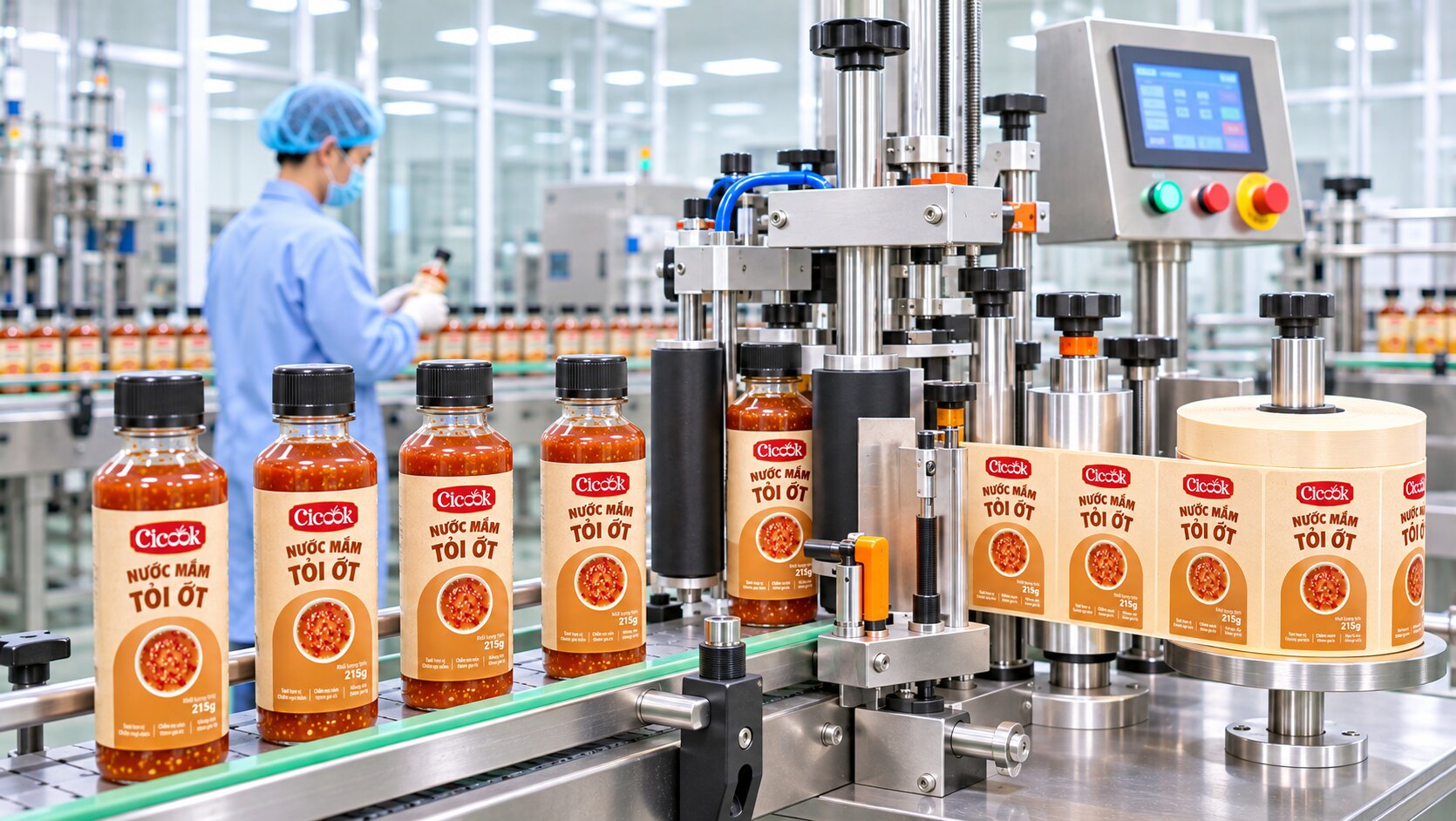
Sauce bottles on a labelling line (AI-generated illustration)
1. Why should importers verify supplier certificates?
Because a PDF on a sales email is a claim, not proof. Certificates expire, cover only certain sites or products, and can be issued by bodies that are not accredited. Buyers who rely on a supplier's food safety status for customs, retailer audits or their own approval process need to know that each document is real, current and covers the product they are buying.
The checks are quick once you know where each record lives. The table below sets out where to look for the documents most often requested from Vietnamese sauce and seasoning makers.
2. Where can each certificate be checked?
| Claim | What the supplier should provide | Where to verify |
|---|---|---|
| US FDA food facility registration | Registration number (FDA does not issue a certificate) | Your US agent or importer; FDA issues the number to the facility |
| ISO 22000 or other accredited management system certificate | Certificate with number, scope, site address, issue and expiry dates, certification body | IAF CertSearch (accredited certificates only) or the certification body |
| HACCP certification | Certificate with scope and issuing body | The issuing certification body; IAF CertSearch if issued under accreditation |
| Halal, kosher or organic | Certificate listing the products and site | The issuing body, and whether your market or customer recognises it |
| Batch COA | Results per batch with test methods | Compare against the agreed specification; ask who performed the tests |
2.1 Does FDA issue a registration certificate?
No. In its guidance on registration fees and third-party businesses, FDA states that food facilities do not need a certificate of registration and that it does not issue one, nor does it recognise certificates issued by private businesses. FDA also notes there is no fee to register, issues a registration number to registered facilities, and says private firms offering registration services are not affiliated with it. A "certificate" carrying the FDA logo should therefore prompt questions, not trust.
2.2 How do you check an ISO 22000 certificate?
Use IAF CertSearch or ask the certification body. The ISO Help Centre explains that ISO itself does not certify companies or accredit certification bodies, and points to IAF CertSearch, the International Accreditation Forum's database of accredited certificates, as one way to confirm certification and accreditation status. The other route is to contact the certification body, the accreditation body or your national accreditation body directly.
3. What red flags should buyers watch for?
Most problems show up as gaps between the document and the supplier you are dealing with.
- Wrong name or address. The certificate names a different company or site from the one on your contract and invoices.
- Narrow scope. The scope covers, for example, dry seasonings but not the liquid sauce you are buying.
- Expired dates. The certificate is out of date or has no expiry date at all.
- Unknown issuer. The certification body cannot be traced or is not listed as accredited.
- An FDA "certificate". FDA does not issue them, so any such document came from a private business.
4. A five-step verification checklist
- Collect originals. Ask for each certificate and the FDA registration number in one request, and keep them with your export documents for Vietnamese sauces.
- Match the details. Check legal name, site address and product scope against your contract.
- Check at the source. Search IAF CertSearch or contact the issuing body; confirm the FDA number through your US agent or importer.
- Check religious and organic claims with the issuer. For example, our guide to kosher certification for sauces explains what a product-level certificate should cover.
- Diary the expiry dates. Ask for renewed certificates before they lapse, and re-check when the supplier changes site or recipe, alongside your sauce specification sheet.
5. What this means for importers and brands
For importers and private-label brands, a short verification routine protects audits, customs files and retailer listings. CiCook's facility is registered with the US FDA and certified to ISO 22000:2018 by an IAF-accredited body, with HACCP and HALAL certification and a COA for every batch.
FAQ
Should a supplier send an FDA registration certificate?
No. FDA issues a registration number to registered facilities and states that it does not issue registration certificates or recognise those issued by private businesses.
Does IAF CertSearch list every certificate?
No. It includes only accredited certificates. For others, contact the certification body that issued the document.
Want to check our certificates for your file? Contact CiCook or message WhatsApp +84 813 378 398.